
An X-ray of the Ibieca Farm
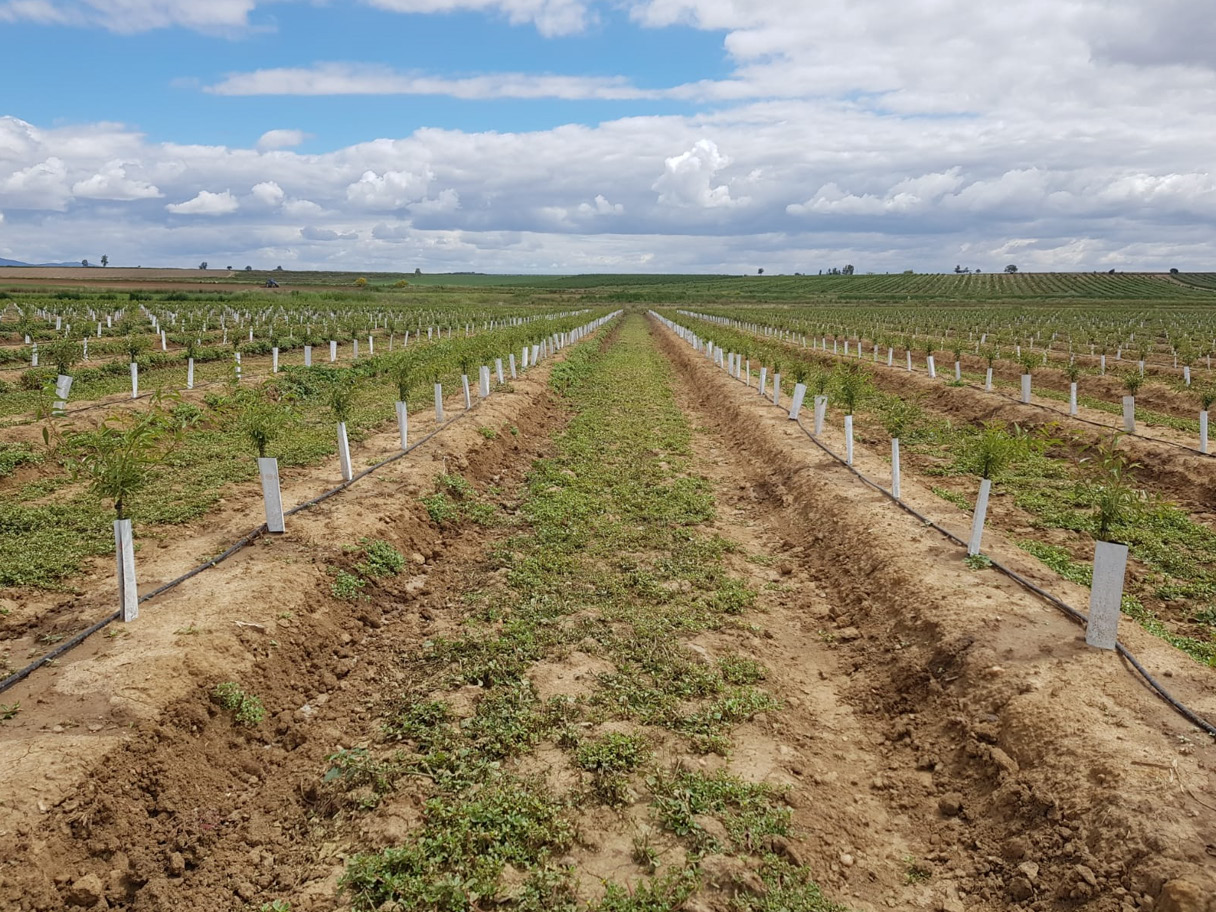
A step-by-step look at the development process of a rainfed farm with own-rooted almond trees in Huesca during its first year after planting
Could you briefly describe the farm where we are now?
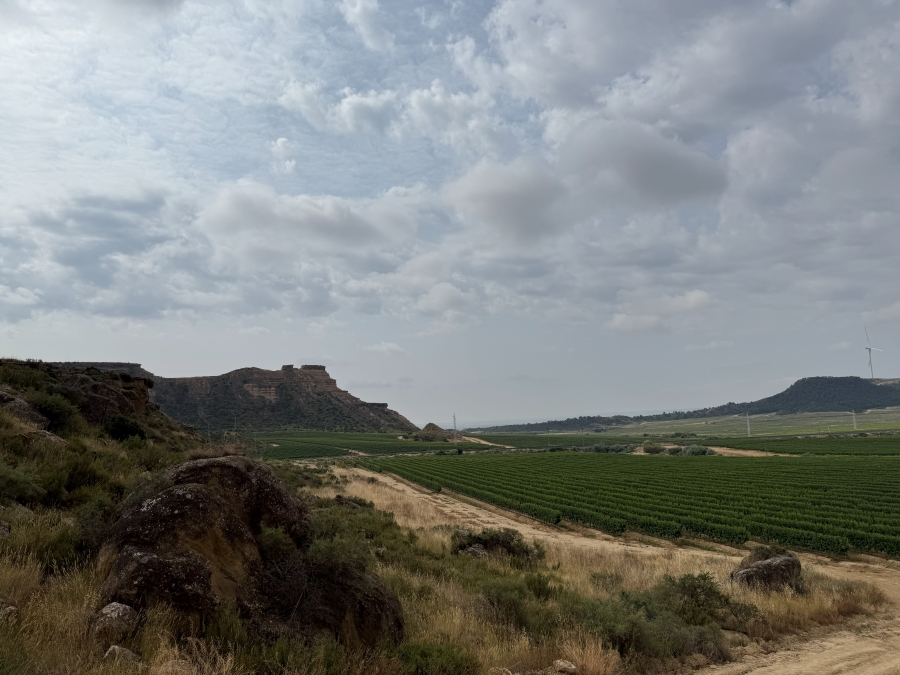
We are in Ibieca, near the Sierra de Guara, in northern Huesca. This farm was planted in 2025 with own-rooted almond trees of the Penta and Avijor varieties. The farm includes a rainfed area, another area with supplemental irrigation, and a fully irrigated sector with the same varieties, but in this case grafted onto Rootpac® 20.
This is a newly developed irrigated farm in the province of Huesca, located within areas of national strategic interest where new irrigation schemes have been implemented. It is a region with great potential for woody crops such as almond and olive trees due to its climate and topography.
When starting a project like this, how should one proceed? What are the first steps?
In this specific case, the farm was selected with the aim of establishing an almond orchard.Once the site had been identified, it was monitored over several winters. We used soil sensors and local weather stations to assess and analyze climatic conditions.
After that, we carried out a contour and topographic study to identify runoff areas, water accumulation points, and the soil’s characteristics.It is extremely important to seek good advice before launching a project like this. Expert support is key to determining whether a project succeeds or fails.
Once all this groundwork is done, the next step is to define a solid business plan in order to apply for bank financing, which in this case was not an issue given the favorable conditions of the area for this crop.
So almonds already had a strong tradition in the area?
Yes. This is an area where you can find almond and olive plantations with a long history. Ultimately, it is a region with very good climatic conditions and low frost risk.
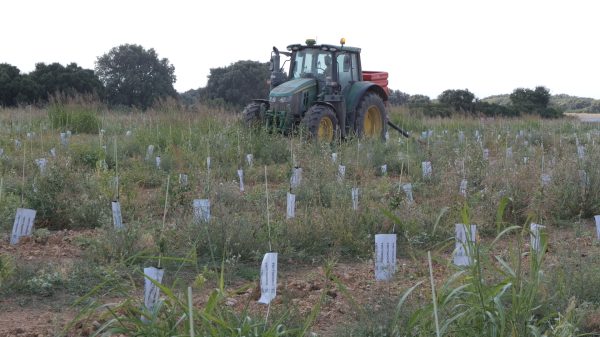
The soil conditions are good from an edaphological point of view. Even so, significant pre-planting subsoiling was carried out on the farm, because once the crop is established, these operations can no longer be performed. A base fertilization and compost application were also carried out, especially focused on the rainfed areas, since later on we would not be able to supply nutrients via irrigation.
In terms of rainfall, what average levels can we expect here under rainfed conditions?

You mentioned earlier that frost events in this area are minimal, almost non-existent.
Yes. Even though we are in the northern part of the Iberian Peninsula, the Ebro Valley has a great variability of micro-areas, which is why choosing the right plot in the right location is so important. There are small microclimates where you can be outside frost-prone zones. Local farmers have historically opted for these crops precisely because frost interference has been low. That’s why being in northern Spain is not always synonymous with frost risk.
That said, if an area is prone to frost, water becomes a major ally. Using available water allocations for anti-frost irrigation is also a very common practice.
Let’s get back to the farm development plan. We already have the land and suitable climate, and we know which areas will be rainfed and which won’t. What comes next?
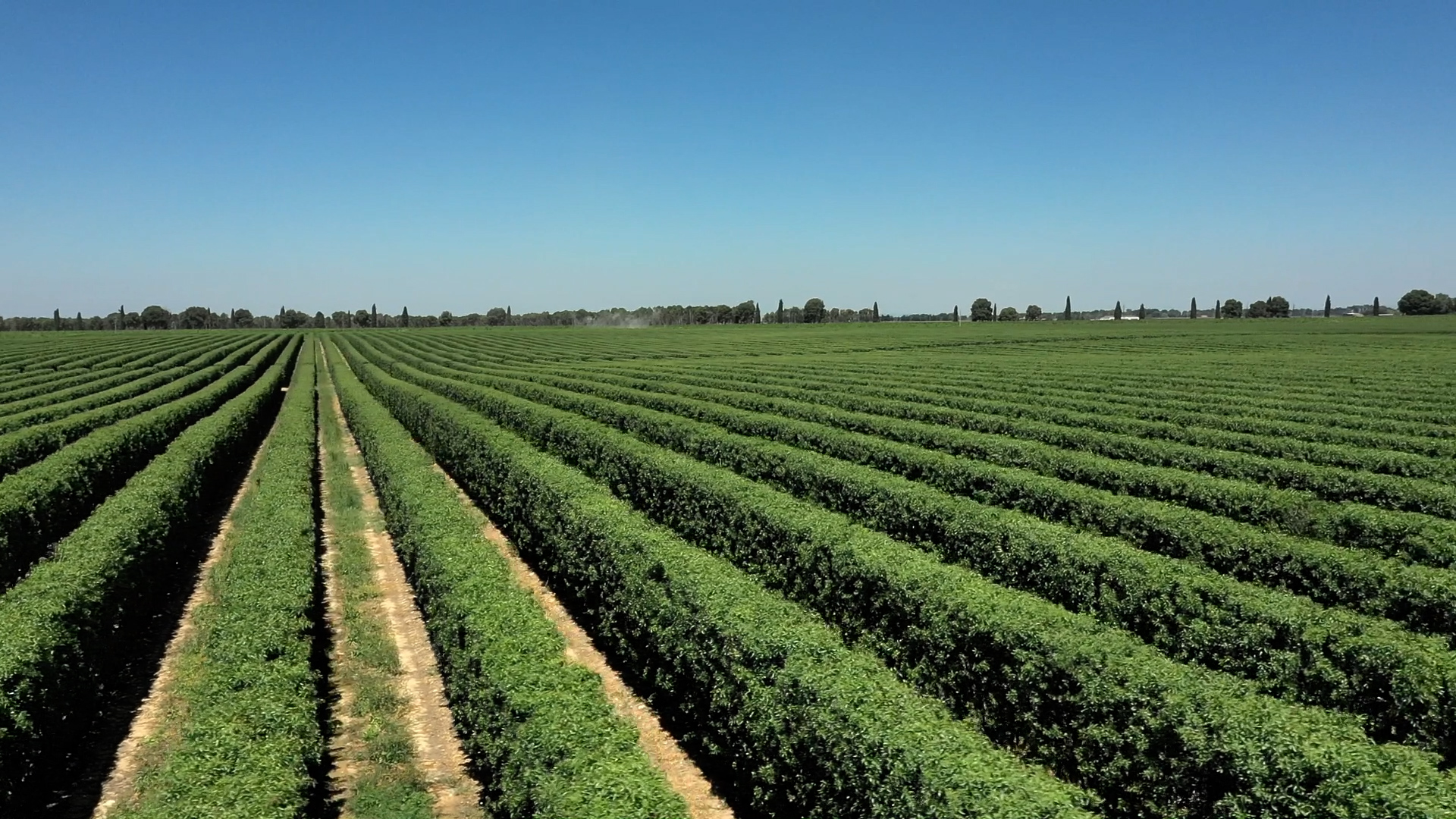
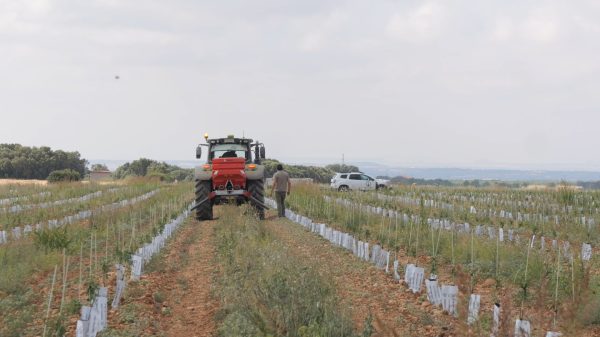
The next step is choosing the planting system. We firmly believe that the hedgerow system is the future. For us, there is no other way to understand woody crop farming in the coming years.
Hedgerow systems allow for mechanization, better control of machinery timing, access to metrics, and fine-tuning of fertilization and inputs—all of which are directly linked to sustainability. If you don’t have a linear system that you can measure and control, you won’t have the data you need to improve efficiency.
Once the system is chosen, genetics come into play. What criteria should guide a good varietal choice?
You need proper advice—someone has to help you make that decision, because it’s a one-time decision that will last for the entire life of the orchard.
You also need to consider that some farms have variability within different zones, meaning the same variety may not perform equally well everywhere. You need to find the most suitable variety for each area of the farm.
In the case of the Ibieca farm, with own-rooted almond trees, precision is even more important, because each variety expresses itself exactly as it is. You have to choose the variety that best fits the soil and conditions.
Pruning requirements are also critical. Pruning is a key factor in hedge development, as good branching is essential to properly form the productive wall. Some varieties adapt better than others to hedgerow systems.
Speaking of pruning, it’s a key element in managing rainfed orchards. How important is it to be technical and precise with pruning?
Pruning has to be done at the right time—when the plant is asking for it. You really need to be precise and careful with these decisions, and carry them out as quickly as possible so the entire orchard stays synchronized.
If pruning is delayed or done at the wrong time, imbalances will appear in the plantation. Ultimately, what you’re looking for is the greatest possible homogeneity across the orchard.
In the coming years, what tasks will be essential to achieve good production and profitability?
Looking at the Ibieca farm and its future expectations, it’s fair to say that almonds have a promising future ahead, right?
Absolutely. Especially here in the Ebro Valley, where almonds have historically been part of the agricultural landscape. Market information suggests that almond prices are expected to improve compared to recent years, which will undoubtedly strengthen almonds’ position in the market.
It is a crop with enormous potential in the Iberian Peninsula—something we already know well. We have a well-established network of companies, advisors, and operators who understand the crop and the production system, and who will certainly work together to make the Peninsula a leader in almond cultivation.