
Between Speculation and Reality: An Overview of an Olive Campaign Marked by Uncertainty
Elaiologist Miguel Abad shares in this opinion piece a technical and thoughtful perspective on the latest 2025/26 campaign, full of doubts. A reflection that invites prudence and long term thinking.
A Predictable Crop… and a Sector That Isn’t Quite So Predictable
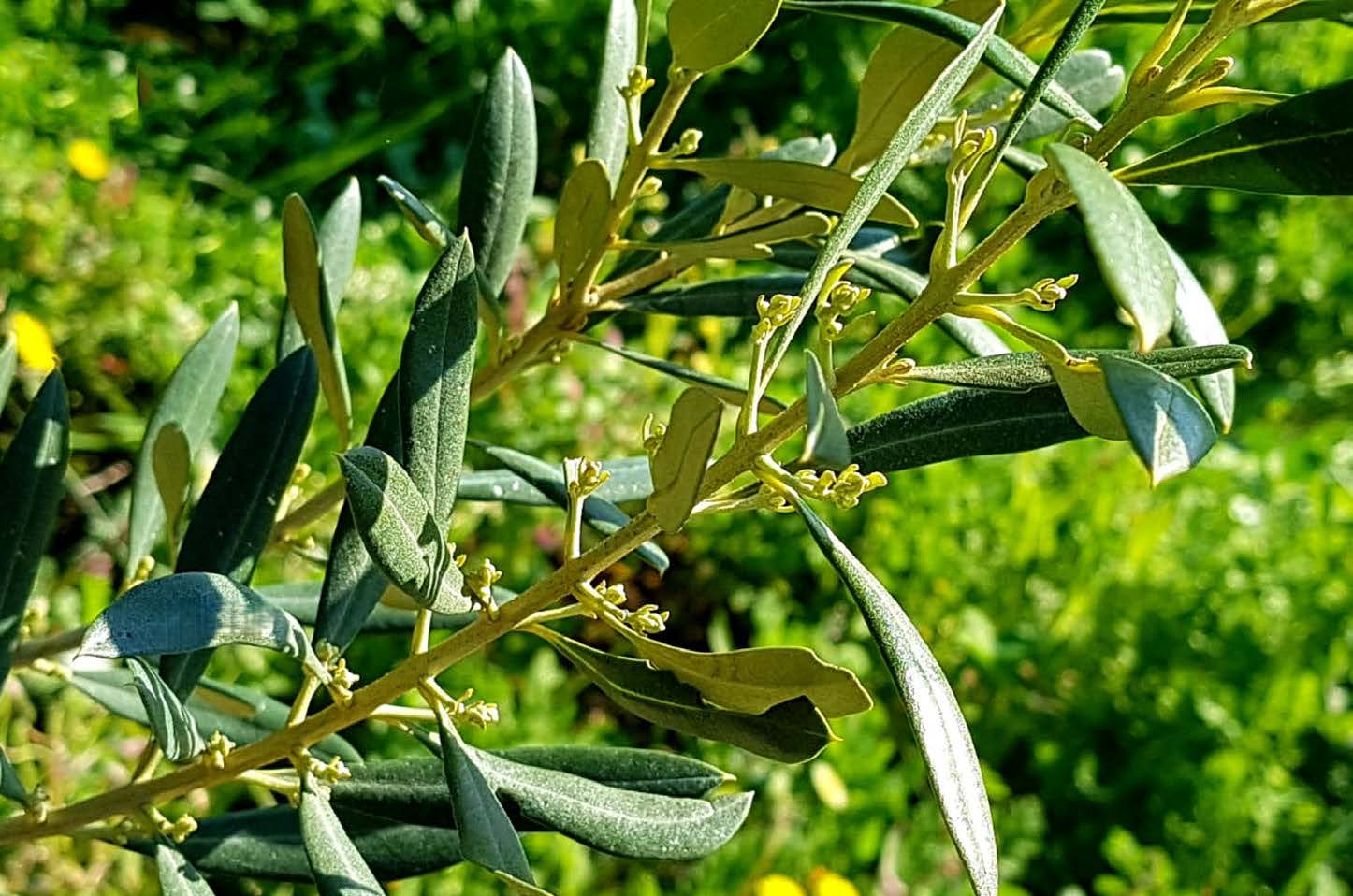
That the olive tree produces based on the growth it achieved during the spring prior to harvest is something well known by all of us in the sector. Then, a series of factors will determine or influence whether the olive tree provides us with more or less yield: its nutritional reserves, the weather leading up to this growth—especially during flowering and fruit set—soil moisture reserves, the amount of rainfall, and the absence of pests or diseases affecting the tree or the olive.
All of these factors, along with many more agronomic, physiological, and edaphoclimatic considerations, chart the path that will ultimately determine whether we have an olive crop available for harvest throughout autumn and part of winter.
Those of us whose livelihoods revolve around the olive grove, and who depend on its production to continue our economic activity, rarely follow such clear, studied—yet sometimes still misunderstood—patterns. Quite the opposite: we spend most of our time practicing the art of futurology, more commonly known as speculation.
And since flowering in this 2025/26 campaign, we’ve been speculating about how it would turn out—something that, of course, is never known until the very end, when the oil is actually stored in the tanks.
I remember that when I was a child, every year—always before the olive harvest—I would ask my grandmother María: “Grandma, how much oil are we going to get this year?” And my grandmother, very wisely—because she was an extraordinarily smart woman—would answer: “Maño, I’ll tell you when it’s in the jar.”
Not because she hadn’t lived through dozens of campaigns and couldn’t guess a forecast, but because history had taught her to be prudent—both in attitude and in spirit.
Speculation has been the common theme throughout this entire campaign: whether there would be a lot or less than expected; whether it would be short or long; whether the oil yield would be one thing or another… But above all, speculation about crop volume affects prices, and that’s a whole different story.
A Different Beginning Than Expected
Throughout September—before the harvest had even started—a generalized anxiety emerged about the amount of fruit visible on the trees, which pushed prices clearly downward. Without any major transaction taking place, prices dropped between 20 and 30 cents compared to August levels, all without knowing what the campaign would look like and despite consumption holding steady despite last year’s prices.
So why did this unnecessary situation arise? Speculation—futurology—once again reared its head. Well, in truth, it never really went away, and there we all were, trying to predict the future once more.
The harvest itself unfolded differently. High quality early oils began to be produced in late September and early October, with varieties such as Frantoio, Manzanilla Villalonga, Borriolenca, and even later varieties like Hojiblanca or Picual. In areas such as Almería, Murcia, or parts of Alicante, dry basis yields above 36% were recorded, heavily influenced by extreme drought and high temperatures, which made producing top quality oils extremely difficult. Only in areas with secure irrigation was the process more manageable.
These initial yields, extrapolated to the rest of the oils still to be produced, indicated that the campaign was running slightly late and that we should be cautious when determining the true start of the regular harvest. And indeed, early processing showed such low fat content that continuing was unfeasible. Most mills chose to wait for yields to improve. Early on, yields hovered around 12–13% Industrial Fat Yield, which resulted in very low olive prices—exacerbated by the completely unjustified price drop seen in September.
Were yields going to end up falling short instead?
In the end, that did not happen.
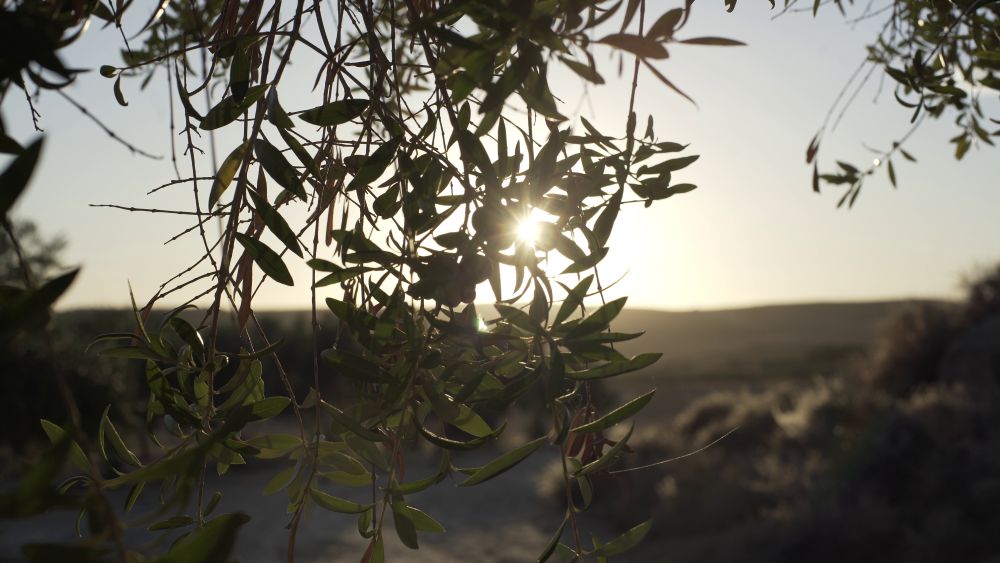
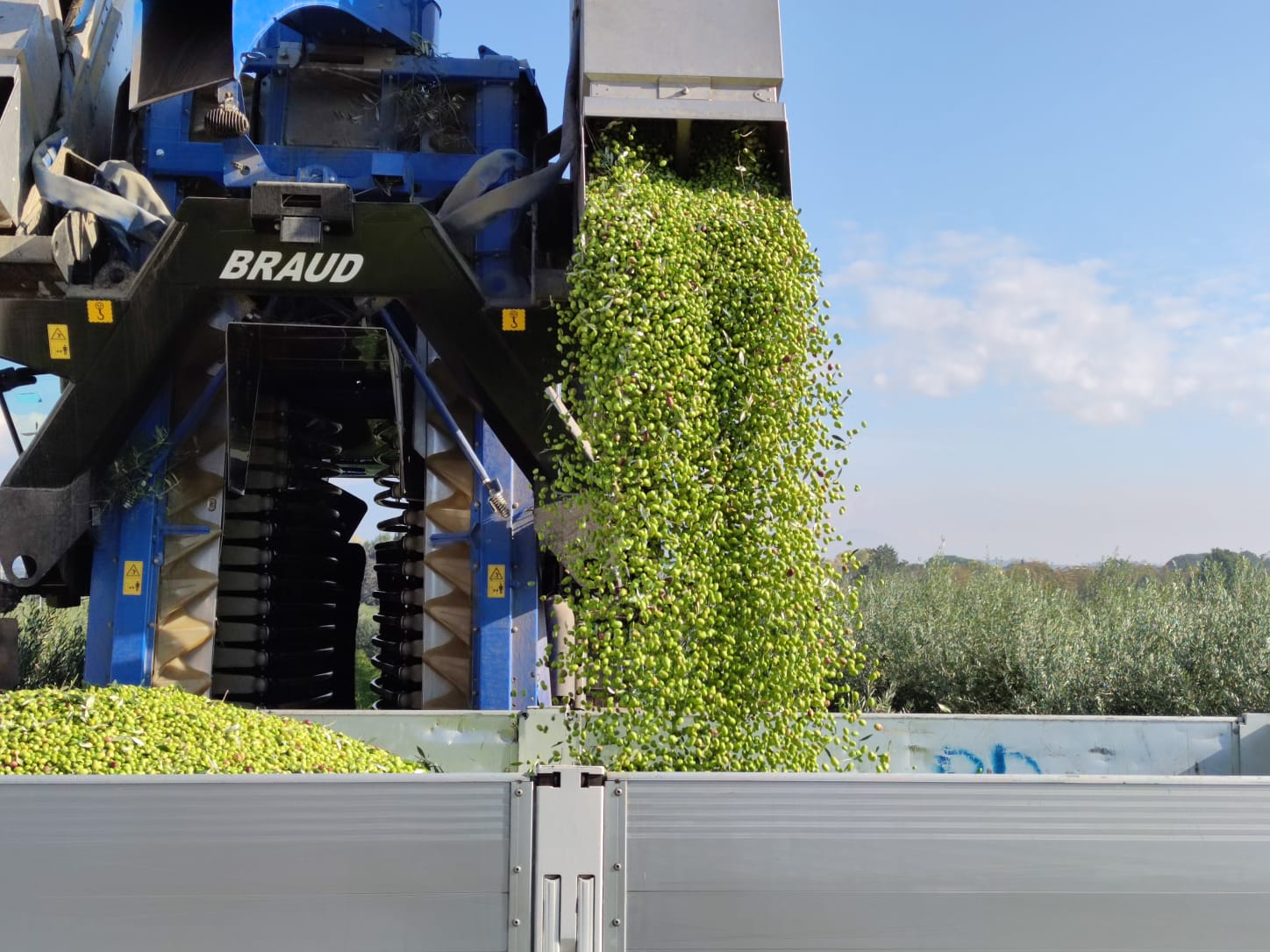
Thus, the campaign didn’t really kick off until late November—or even December—and very soon slowed, then stalled entirely, especially in high production regions due to continuous storms of wind and rain, which made consistent harvesting impossible. By late December, according to AICA, only about 720,000 tons of oil had been collected—roughly 20–25% less than in the same period the previous year.
Some agricultural service companies told me they had only worked about 10 days in December and 8 in January. A true disaster.
To make matters worse, labor shortages meant some areas—though less productive and therefore with less impact on total national output—lost part of their crop because harvesting costs exceeded the price of the olives at the time.
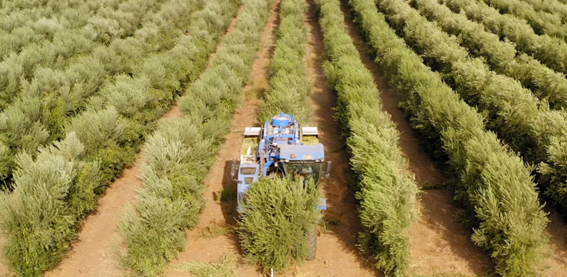
(Open parentheses: these and other circumstances force us to reflect on the need to convert certain traditional olive groves—where feasible—into hedgerow or more intensive plantings that allow for mechanized harvesting, less dependent on labor, and which, if managed with cover crops and reduced tillage, would be less affected by adverse weather, ensuring higher quality oils. Close parentheses.)
Compromised Quality and a Prolonged Campaign
Quality has also suffered due to these conditions. By delaying harvest in hopes of better yields, weather caused an indeterminate amount of fruit to fall, and in many areas it was impossible to enter the groves from mid December through late January. This meant that the remaining fruit on the trees overripened, compromising the quality of oils extracted later.
In short, a combination of factors means that today—March 6, 2026—the campaign still has several weeks to go. It won’t conclude before late March, possibly even early April.
True, oil produced in November and December contains a high percentage of extra virgin and fewer lower grades. But anything produced later will largely not be extra virgin; quite the opposite. Many of these oils will need to be refined, increasing the price gap between extra virgin, virgin, and lampante—as is already happening.
Eyes on the Next Campaign
Speculation—or futurology, once again—has returned. This campaign isn’t even over yet; we don’t know total production figures—much less quality distribution—and we’re already making predictions about the next one.
We’re hearing that soil moisture reserves have increased significantly (true), or that spring will be excellent for olive trees thanks to rainfall and the condition of the orchards (something no one knows and won’t know until summer arrives).
Factors such as the presence of diseases like peacock spot, or even floral abortions caused by west winds or hormonal reactions triggered by late harvesting—one of the factors that can worsen alternate bearing—could influence the agronomic year and completely alter any predictions being made today about the 2026/27 campaign.
What is clear is that there is an excess supply of extra virgin oil and a large volume of virgin and lampante. This is causing a significant price spread. At the time of writing, prices are approximately:
• Extra virgin: €4.30–€4.50
• Virgin: €4.10–€4.20
• Lampante: around €3
This last case is puzzling, because if the campaign totals around 1,350,000 tons—similar to last season—and considering refined oil (sold as “olive oil”) is the most widely consumed category globally, why the downward panic in lampante? Speculation again?