
From Grapes to Almonds:
Stefano Pugliese’s Agricultural Revolution
You have been a family that has always produced table grapes. We are in the homeland of Apulian table grapes, so why the decision to change direction?
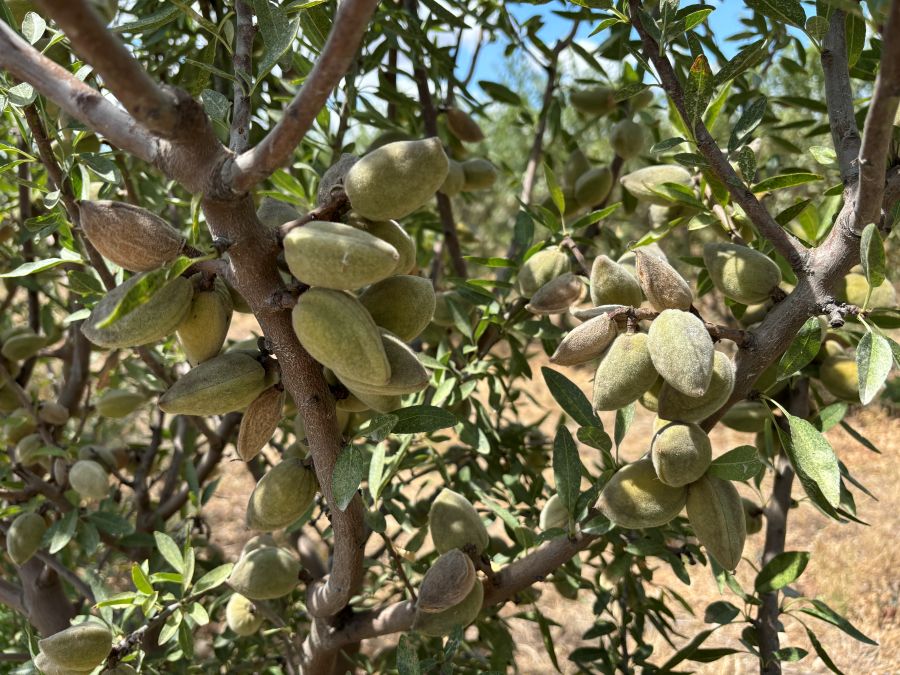
Mainly because table grapes are a product with extremely rapid perishability. Then, from a product‑processing perspective, the almond is— in my opinion—the fruit with perhaps the widest range of possibilities for diversification.
So, aside from the simple advantage of longer shelf life before harvest, this was the main reason. And when I took over the business, the existing crops were already old, so regeneration and restructuring of the company were necessary. We therefore decided to move toward almonds because, also with a view to expansion and moving beyond mere production, the almond is the product that best lends itself to this evolutionary step.
You chose the hedgerow almond system. What advantages have you found compared to other cultivation models?
The choice comes from my educational background: I started working in collective catering, and when you have to serve 2000 customers in one hour, you are forced to optimize processes. Optimization and standardization are the key to a business that works, especially in limited space.
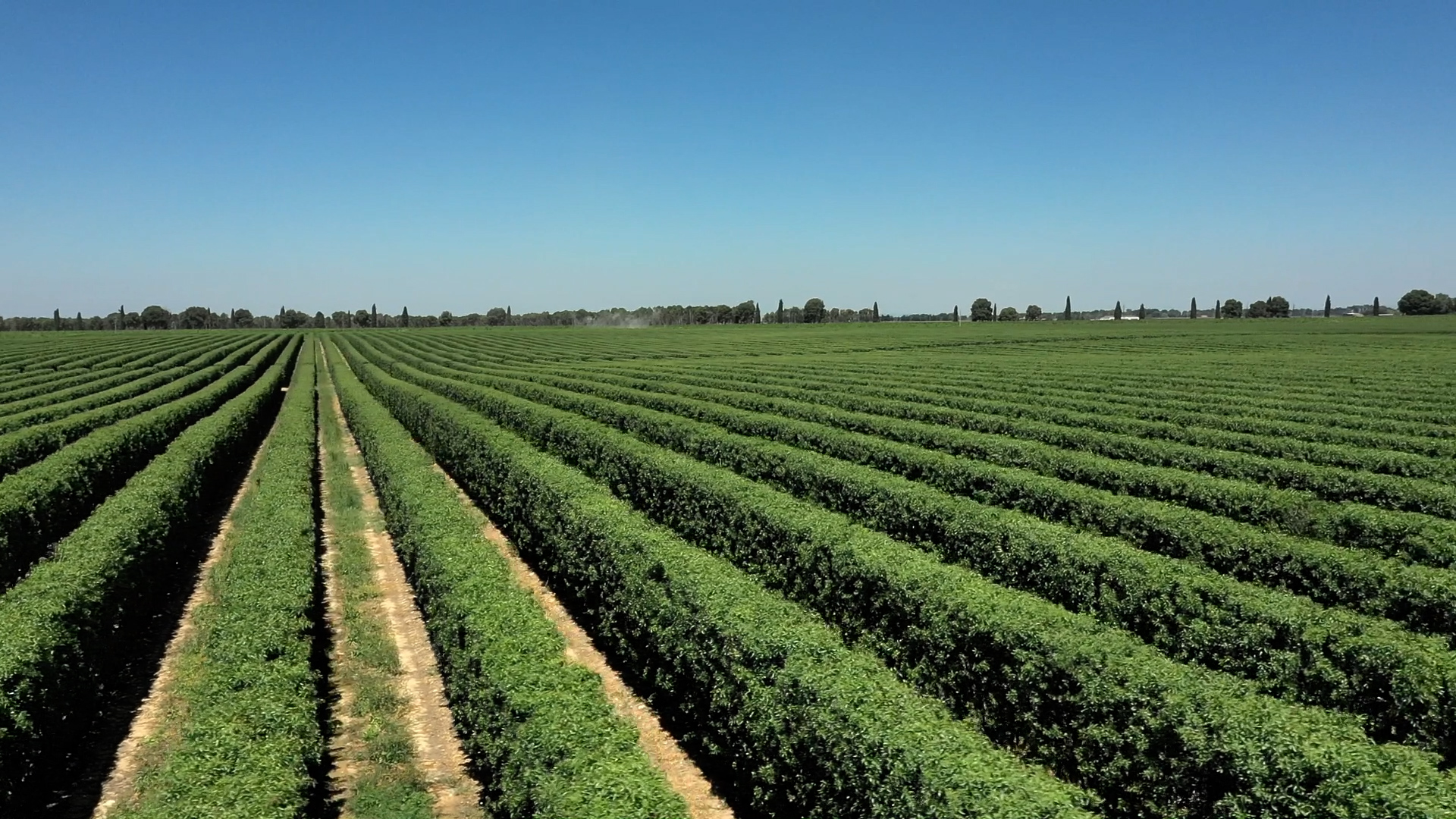
On a 15‑hectare plot, a traditional almond orchard would have made little sense. Planting the trees in hedgerow form allows you to standardize almost everything: harvesting, pruning, and even plant‑protection products, which are more concentrated because there is no dispersion. We are an organic farm and care deeply about sustainability.
A high‑density system is particularly sustainable in organic farming because in less space you can achieve equal or higher yields compared to a traditional orchard, without wasting land. These were the main drivers behind this choice.
From an economic point of view, what factors were decisive in choosing to invest in almonds?
From an economic perspective, I believe in working within a supply chain. In almond cultivation, there are two actors we cannot compete with: California and Spain. Mainly conventional farming and massive volumes. Two production giants.
My approach has been to focus on quality and on building a complete supply chain: organic certification as a base, and then certifications such as For Life, Bio Suisse, Naturland, and even Demeter for biodynamic agriculture. The goal is to stand out through traceability, quality, and strong certifications recognized by the final consumer.
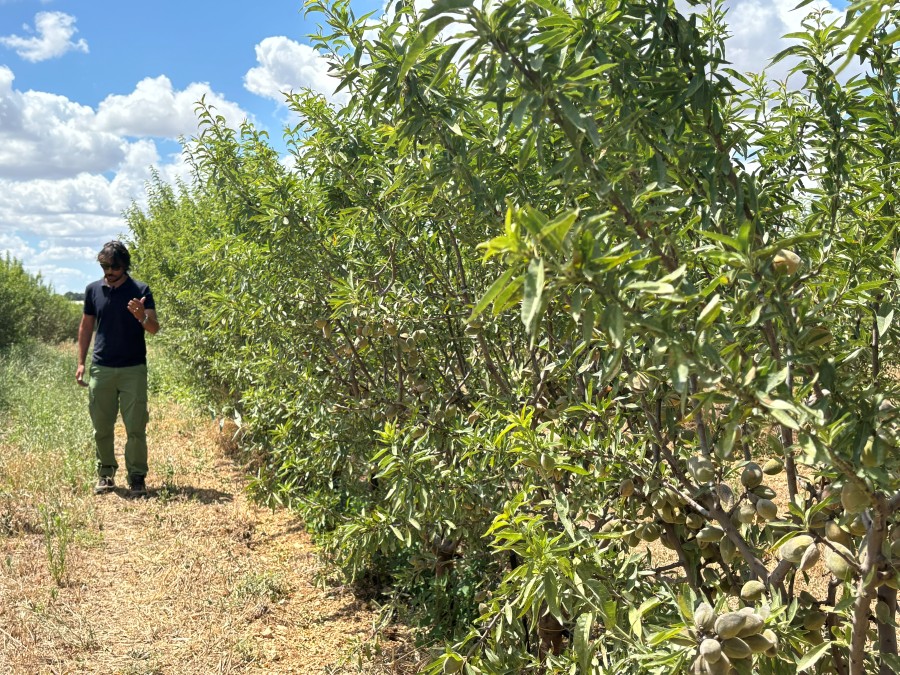
What type of orchard system do you have? (surface area, variety, rootstocks, irrigation program…)
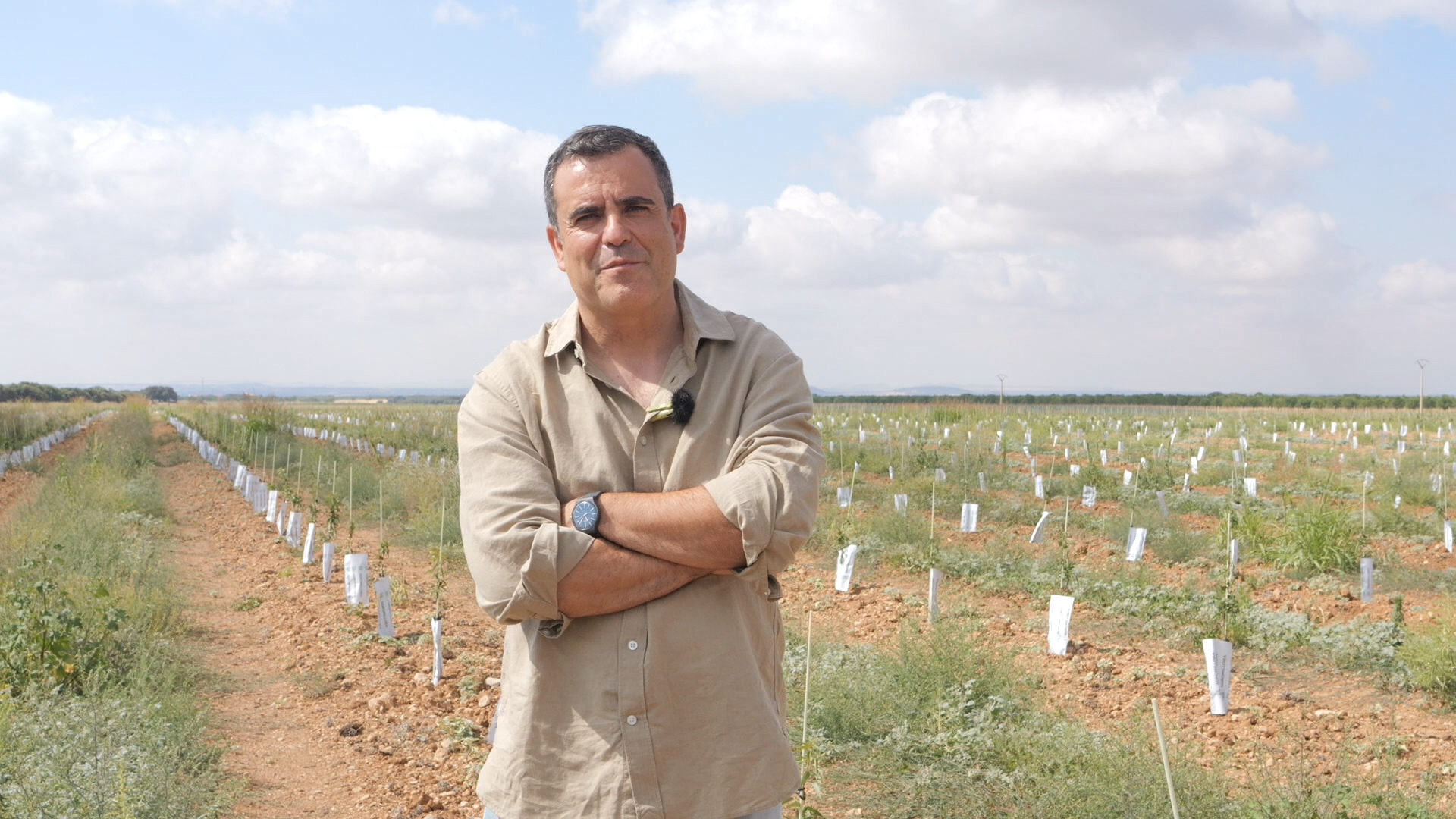
Here we have 15 hectares of almonds cultivated with a single variety, Millares. The rootstock chosen from Agromillora is The Best. The trees are spaced 1.20 m × 3.80 m, giving a density of about 2000–2200 plants per hectare, with a total of around 33,000 plants.
The irrigation system is fully automated—smart irrigation—which allows perfect dosing of organic fertilizer for every liter of water. It collects data from soil, subsoil, and air, allowing us to anticipate the plant’s water needs and dose the water accordingly. This ensures water savings and greater sustainability.
What steps did you take to integrate production, processing, and marketing of almonds in your company?
In 2021, when we planted the orchard, the project already included the construction of a 1200‑m² processing facility for almonds. The goal is to close the supply chain.
The building is still being completed, and it has been a complicated journey due to the typical obstacles of starting everything from scratch. We expect full operational capacity in 2026.
Closing the supply chain is essential because the sector is affected by fraud and irregularities: non‑European product sold as Italian, and so on. Having total control allows full oversight and guarantees at 360°.
We are bringing together virtuous agricultural entrepreneurs with high‑quality orchards and varieties to offer a product that can be transformed in many ways.
What obstacles did you have to overcome for this model to work?
Many obstacles were technical and structural: building a system from scratch that resembles industrial processes is not easy. Permits, timelines, professionals who do not fully meet expectations.
Regarding the supply chain, creating the agricultural consortium company is a challenge: agriculture here lacks a culture of aggregation. Land is fragmented, mindsets differ, and people fear being deceived. Conveying our objectives and vision has been difficult.
Do you believe almond cultivation can be profitable and sustainable for other farmers in Southern Italy?
How do you see the evolution of the almond market in the coming years, especially for local production compared to international competition?
The market is lively, full of players who do things well. Competing with Spain and California in terms of volume is impossible. The way forward is quality: supply chain, traceability, standardized orchards.
Farmers need to unite: this is the key to obtaining recognized prices and a traceable product. Profitability depends on the entrepreneur’s ability to modernize.
From your experience, what is the key to making an agricultural project like yours sustainable and competitive today?
From your experience, what is the key to making an agricultural project like yours sustainable and competitive today?