
Mildew and Powdery Mildew–Resistant Varieties Are Now a Reality
Add Your Heading Text HereThe Valladolid Fair hosted a conference organized by Agromillora, in collaboration with Revista Campo and Itacyl
The wine industry is facing unprecedented challenges related to the effects of climate change, the impact of diseases, and restrictions on active substances. In this context, resistant varieties are already emerging as a real solution for the sector.
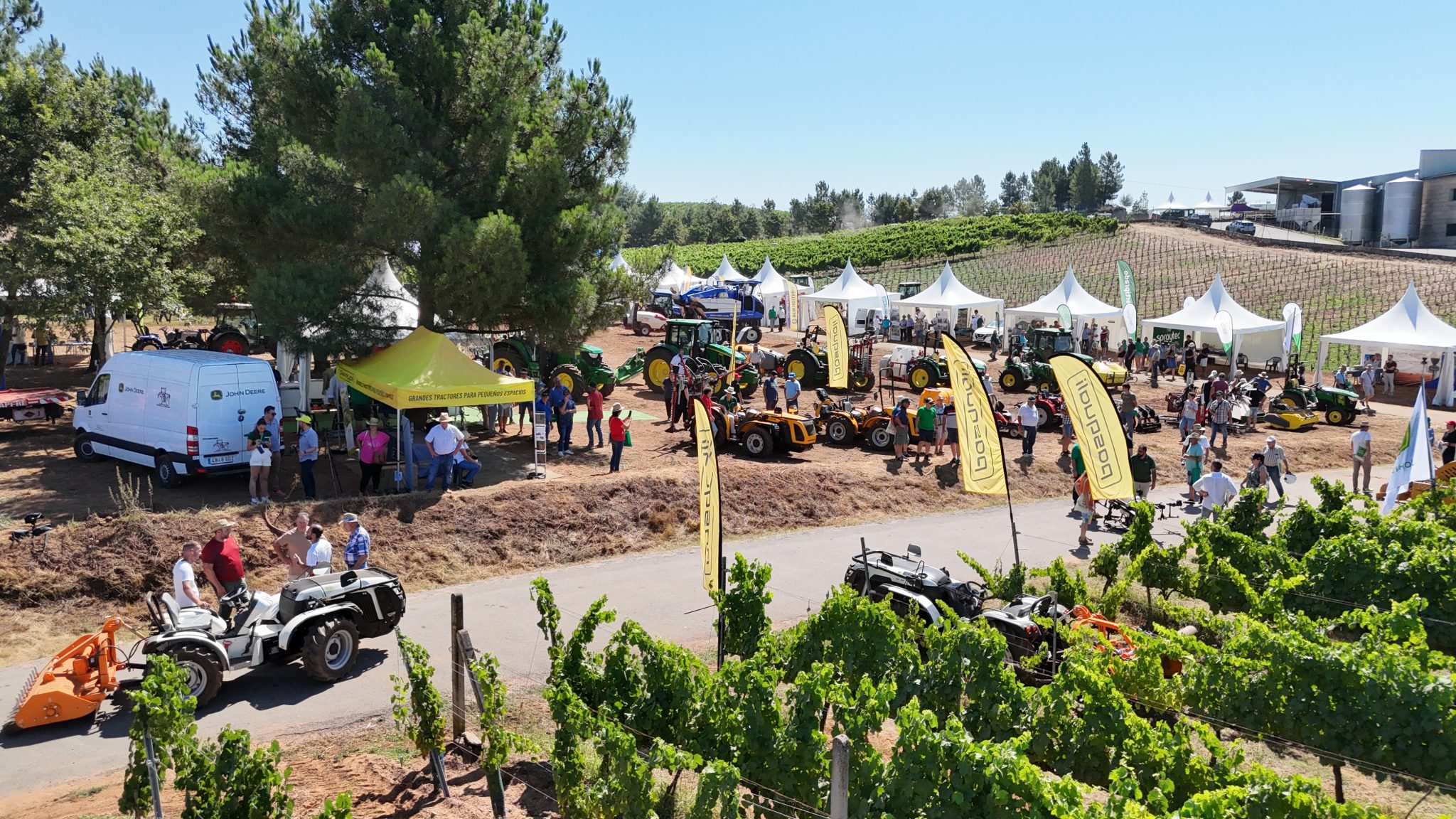
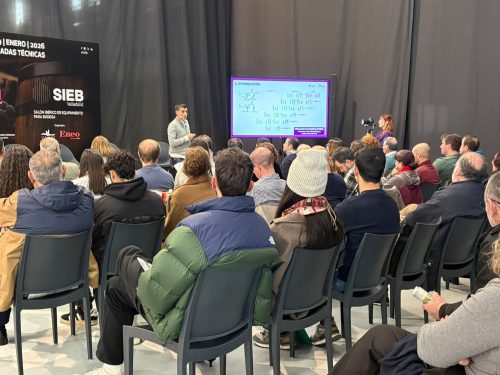
As part of the Agrovid fair at the Valladolid Exhibition Center, the event “Resistant Varieties: A Reality in Castile and León” was held this Wednesday. The conference, organized by Agromillora VCR in collaboration with Itacyl and Revista Campo, highlighted advancements in the development of grapevines designed to combat fungal diseases such as downy mildew and powdery mildew.
Innovation in the Face of Climate Challenges
“One of Itacyl’s main objectives is to conduct research that provides real solutions for industry professionals,” explained Cristina León, Deputy Director of Research and Technology at Itacyl.
A concrete example is the trial presented by researcher Enrique Barajas, a research and development project in which the institute, together with other Spanish research centers, has made four new PIWI wine grape varieties available to growers in Castile and León. These varieties are resistant to the two most serious fungal diseases affecting vineyards: downy mildew and powdery mildew.
The varieties introduced in the Commercial Varieties Registry of Castile and León are Soreli, Sauvignon Rytos, Cabernet Eidos, and Merlot Khorus. They were developed after several years of testing at the Zamadueñas Experimental Farm. “These varieties have demonstrated agronomic, sanitary, and enological performance fully adapted to the climate and soils of Castile and León, while also ensuring quality parameters in both grape and wine production comparable to traditional benchmark varieties, such as Tempranillo or Verdejo,” Barajas explained.
A Strategic Debate for the Sector
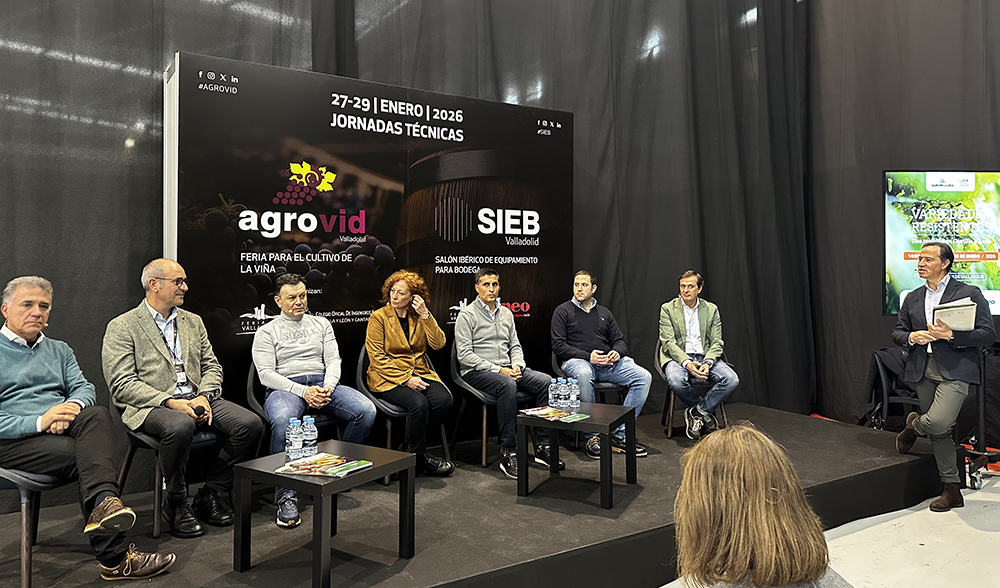
Afterward, a roundtable moderated by Máximo Gómez, director of Revista Campo, titled “The Future of Resistant Varieties in Castile and León,” brought together a panel of experts to analyze the viability of these plants from different perspectives.
Participants included Enrique Barajas (Itacyl), Ana Díez (Neiker), Javier Bayón (Bodegas Matarromera), José María Ayuso (González Byass), Marco Sanz (viticulturist), Mauro Pizzuto (VCR), and Adelino Lilo from the Regulatory Council of DO Bierzo.
Speakers agreed that the development of these varieties represents a strategic step for vineyard sustainability in Castile and León, enabling more ecological and climate resilient viticulture.
“When Agromillora approached us with the project, we saw it as a challenge toward environmental sustainability, as a way to search for alternatives that overcome restrictions on phytosanitary substances,” explained Ana Díez of Neiker (the Basque Institute for Agricultural Research and Development).
For his part, José María Ayuso, technician at González Byass, said: “In the past 10 years, we’ve carried out seven vinifications in which we wanted to observe how these varieties adapt to our soils, how they respond to diseases, whether they are truly productive, and, above all, their organoleptic profile.” The latter, he noted, “is where we still struggle the most.”
At Bodegas Matarromera, “we started a project in 2024 betting on this type of variety. We wanted to see which varieties adapted best to our growing areas. We decided to carry out the project in the Rueda region and chose Sauvignon type varieties and Soreli. The experience has been positive. In this difficult year for downy mildew, these varieties were not affected,” said Javier Bayón.
Viticulturist Marco Sanz, who has conducted his own trials, emphasized that “we cannot lose the identity of each region. The advantages of these varieties are undeniable, but we must preserve local identity as much as possible.”
For Adelino Lilo, from the DO Bierzo Regulatory Council, “the key is that resistant varieties must be suitable for winemaking without losing the identity of our denominations. Our wines must continue to be our wines and must be recognized by consumers.”
Mauro Pizzuto added: “Today we have a tasting with 130 winemakers in Italy at VCR who will try Prosecco varieties; there is great interest in identifying new varieties—at certain permitted percentages—that allow them to obtain the same wine profile they have today.”
A Wine Made from PIWI Varieties
To close the event, attendees were able to experience the results of this research firsthand. At the Agromillora stand at Agrovid, a tasting was held featuring wines made from VCR resistant varieties obtained by Itacyl, along with commercial samples of PIWI varieties, demonstrating that genetic resistance is fully compatible with excellence in the glass.
With this event, Agrovid strengthens its position as the epicenter of viticultural innovation, pointing the way toward more efficient and environmentally friendly production in the northern plateau.