
New Hedge Olive Varieties in Extremadura: Results from the 2025–2026 Season
It has been nearly 30 years since the olive-growing revolution reached Extremadura. Those early doubts, myths, and the widespread lack of knowledge about the model are now long behind us.
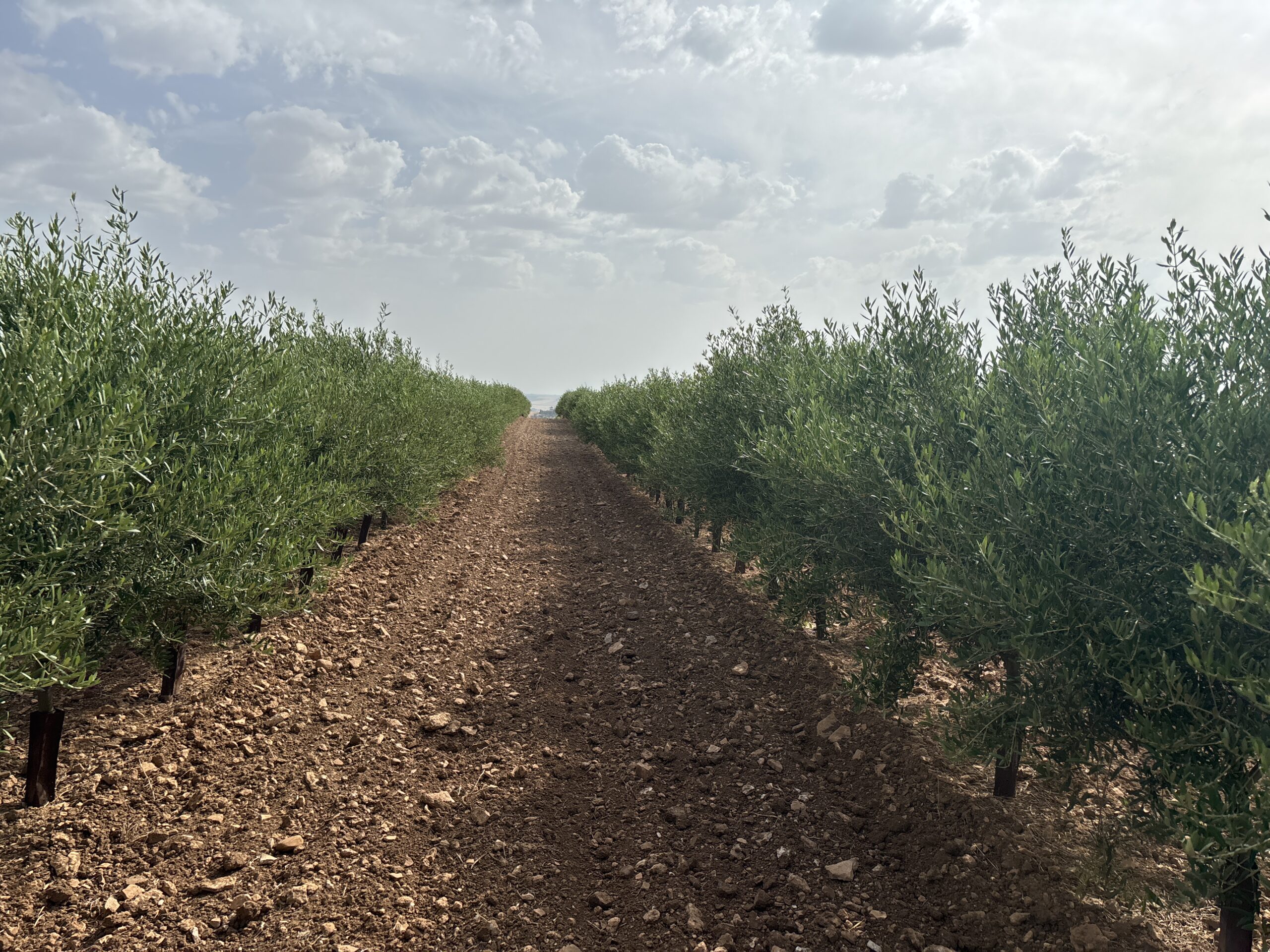
Today, practically all new olive plantations are established as hedgerows. The landscape, of course, is very different from what it was back then. We now benefit from extensive information provided by research centers and universities, from the experience accumulated over all these years, from a large and highly trained group of technicians, and from a new range of varieties that improves upon the traditional Arbequina and Arbosana.
In Extremadura, we are fortunate to have a strong group of pioneering farmers who decided to test new varieties—often unknown to the public at the time of planting and usually without a commercial name, carrying only an identification code assigned by the breeder.
After numerous trials, tests, and eventually commercial plantations, it has been demonstrated that Coriana and Lecciana are viable, successful, profitable varieties that offer clear differentiation compared to Arbequina and Arbosana. Their market penetration and agronomic performance over the years allow us to say that they are now fully established in hedgerow olive orchards.
Coriana is a variety resulting from a cross between Arbosana and Koroneiki. It inherits Arbosana’s consistency and productivity, along with Koroneiki’s precocity and oil quality. Coriana has proven to be extremely productive in irrigated areas, producing more—and higher-quality—oil than Arbequina. Its early ripening and high polyphenol content make it highly demanded by mills. Many plantations can be found in the Guadiana Valley, an ideal environment for its proper development.
In this very area, record harvests were recorded in the 2025 season, often exceeding 2,000 kg of oil per hectare. According to reports from the Río Búrdalos Mill, Coriana batches sold at a higher price, which was reflected in the payments to farmers.
Lecciana, on the other hand, comes from Italian Leccino and Arbosana. Its high polyphenol content, hardiness, and resistance to Xylella fastidiosa come from its Italian parent, while its productivity and vigor suitable for hedgerow systems come from Arbosana. Once again, we find a variety with early ripening and exceptional oil quality, highly valuable for mills producing premium lines or refreshing previous batches. Lecciana has a powerful root system, providing strong resistance to drought and frost—very desirable traits for dryland plantations or those with limited supplemental irrigation. This variety is already present in the drylands of Tierra de Barros and the colder areas of northern Extremadura.
So much so that production in the 2025–2026 season was a resounding success. It is worth noting that the summer was extremely long, hot, and dry, making these numbers truly remarkable.
Francisco Fernández, head of Chicurri Agro, shares the harvest data from the farms he advises: “Most of the farms planted in 2022 are very close to 1,000 kg of oil per hectare, even surpassing that figure in some cases. The plantations from 2023 also reached yields close to 200 kg of oil per hectare.” For Francisco, the key to success in dryland conditions is pruning management.
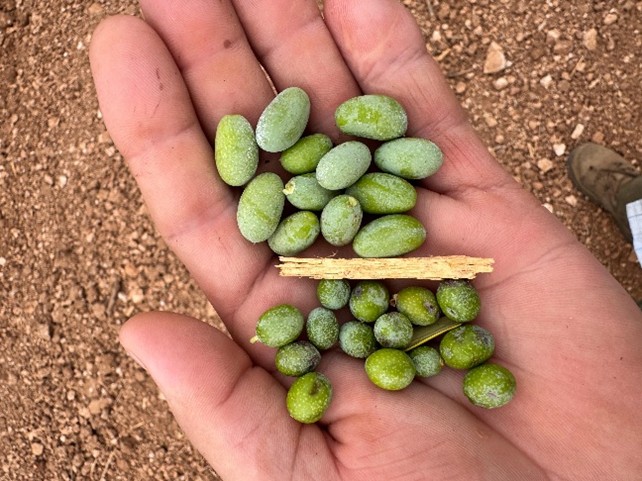
Today, practically all new olive plantations are established as hedgerows. The landscape, of course, is very different from what it was back then. We now benefit from extensive information provided by research centers and universities, from the experience accumulated over all these years, from a large and highly trained group of technicians, and from a new range of varieties that improves upon the traditional Arbequina and Arbosana.
In Extremadura, we are fortunate to have a strong group of pioneering farmers who decided to test new varieties—often unknown to the public at the time of planting and usually without a commercial name, carrying only an identification code assigned by the breeder.
After numerous trials, tests, and eventually commercial plantations, it has been demonstrated that Coriana and Lecciana are viable, successful, profitable varieties that offer clear differentiation compared to Arbequina and Arbosana. Their market penetration and agronomic performance over the years allow us to say that they are now fully established in hedgerow olive orchards.