
The resistance to xylella fastidiosa in olive: heritability demonstrated with leccino crosses
Leccino e le sue progenie mostrano resistenza ereditaria a Xylella fastidiosa, aprendo nuove prospettive per l’olivicoltura sostenibile.
The bacterium and the impact of infections on olive
The symptomatic manifestations associated with Xylella infections in olive, particularly those caused by isolates of the subspecies pauca, are widely documented among the most severe diseases associated with this bacterium at the international level. It is a pathogen with a broad range of host plants, well known since the last century in the American continent for the damage caused to grapevine and citrus.
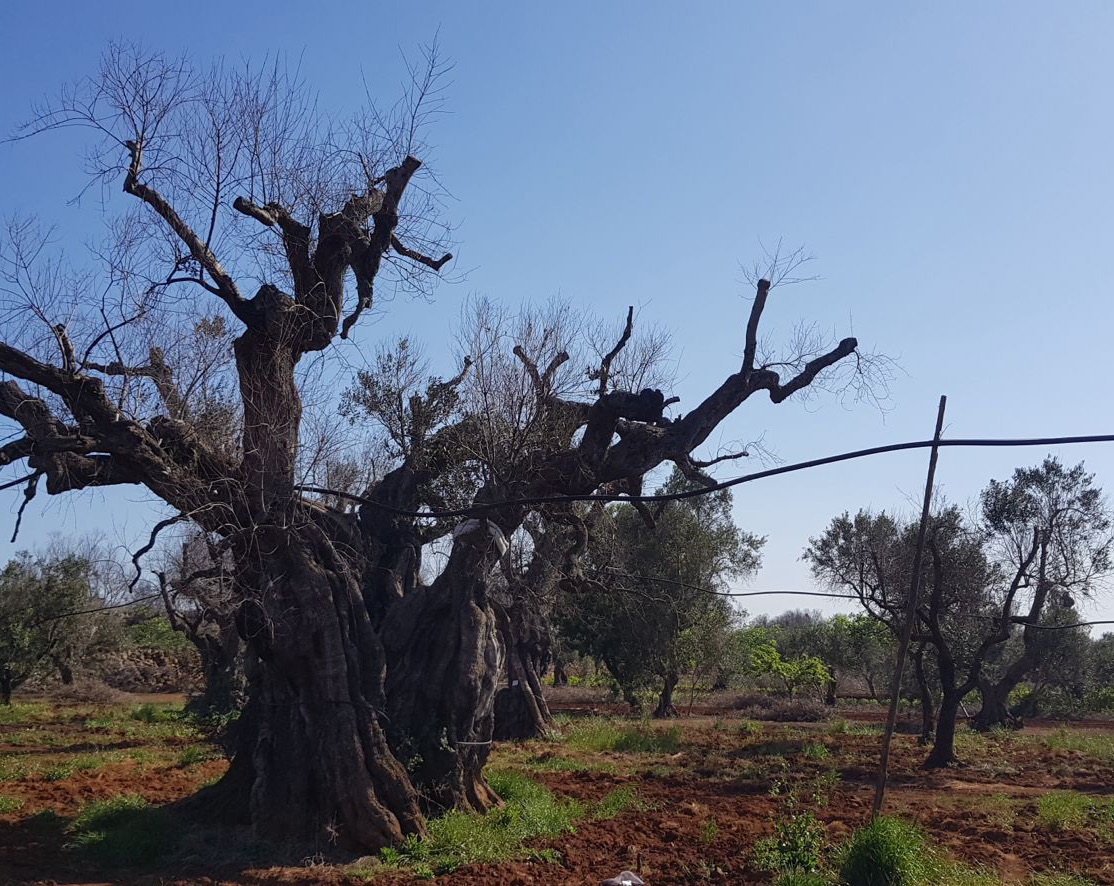
The coexistence of isolates of the subspecies pauca and olive in the same area, as occurred in Apulia, is a recent scenario (olive being a crop that has only recently expanded in the American continent, where the bacterium originates). This situation has clearly revealed the high susceptibility of the species due to the lack of co‑evolution and adaptation. After reports of severe dieback in olives infected by subspecies pauca isolates in Apulia, isolates of the same subspecies were detected in olives with similar symptoms in Argentina, Brazil, and the islands of Ibiza and Majorca.
The complexity of response mechanisms
In the main crops susceptible to the bacterium—grapevine, citrus, and olive—there are significant differences between species/cultivars/genotypes, both in plant response and in vector-mediated transmissibility. Susceptible cultivars generally host high bacterial populations in all tissues and show severe symptoms, while in cultivars with resistance traits, the bacterium can multiply and move from initial inoculation sites but remains at low population levels, with irregular distribution in tissues, which results in limited symptom expression.
In grapevine, resistance has been observed only in certain wild Vitis species, mainly Vitis arizonica, while most Vitis vinifera cultivars are highly susceptible to infections caused by subspecies fastidiosa, which lead to Pierce’s disease, characterized by leaf necrosis and dieback of shoots and plant parts. In grapevine, resistance has been extensively studied and linked mainly to a specific segregating locus known as Pierce’s disease resistance 1 (PdR1), as well as more recently to a multigenic mechanism involving other genomic regions.
In citrus, genetic resistance traits have been found in several mandarins, while most sweet orange varieties are susceptible.
In olive, resistance was first reported and studied in Leccino and later in FS‑17. As in grapevine and citrus, infected trees show limited branch dieback and reduced frequency of infected shoots, along with low bacterial populations.
Although more information is available on the genetic determinants potentially involved in resistance responses in grapevine and citrus, in no species—including olive—are molecular markers available that can distinguish resistant from susceptible genotypes. In olive, functional genomics knowledge is limited and few genotyped resources exist, so the genomic architecture of resistance remains unclear. Multidisciplinary research is underway based on physiological and anatomical observations, transcriptomics, and metagenomics, confirming a complex network of host–pathogen interactions.
For example, in the case of Leccino—the most extensively studied cultivar—there appears to be a greater ability to confine the bacterium within xylem vessels, better manage water stress caused by bacterial occlusions, rely on vessel walls resistant to bacterial degradation enzymes, and maintain a “resilient” microbiome. Defense-response mechanisms similar to those described in grapevine and citrus have also been characterized, triggered by membrane receptors that detect the bacterium early in the infection process, enabling a rapid plant response. These observations on the presence of resistance traits in Leccino have stimulated controlled crossing activity and studies in genetically related cultivars.
Resistance in Lecciana and other new Leccino progeny
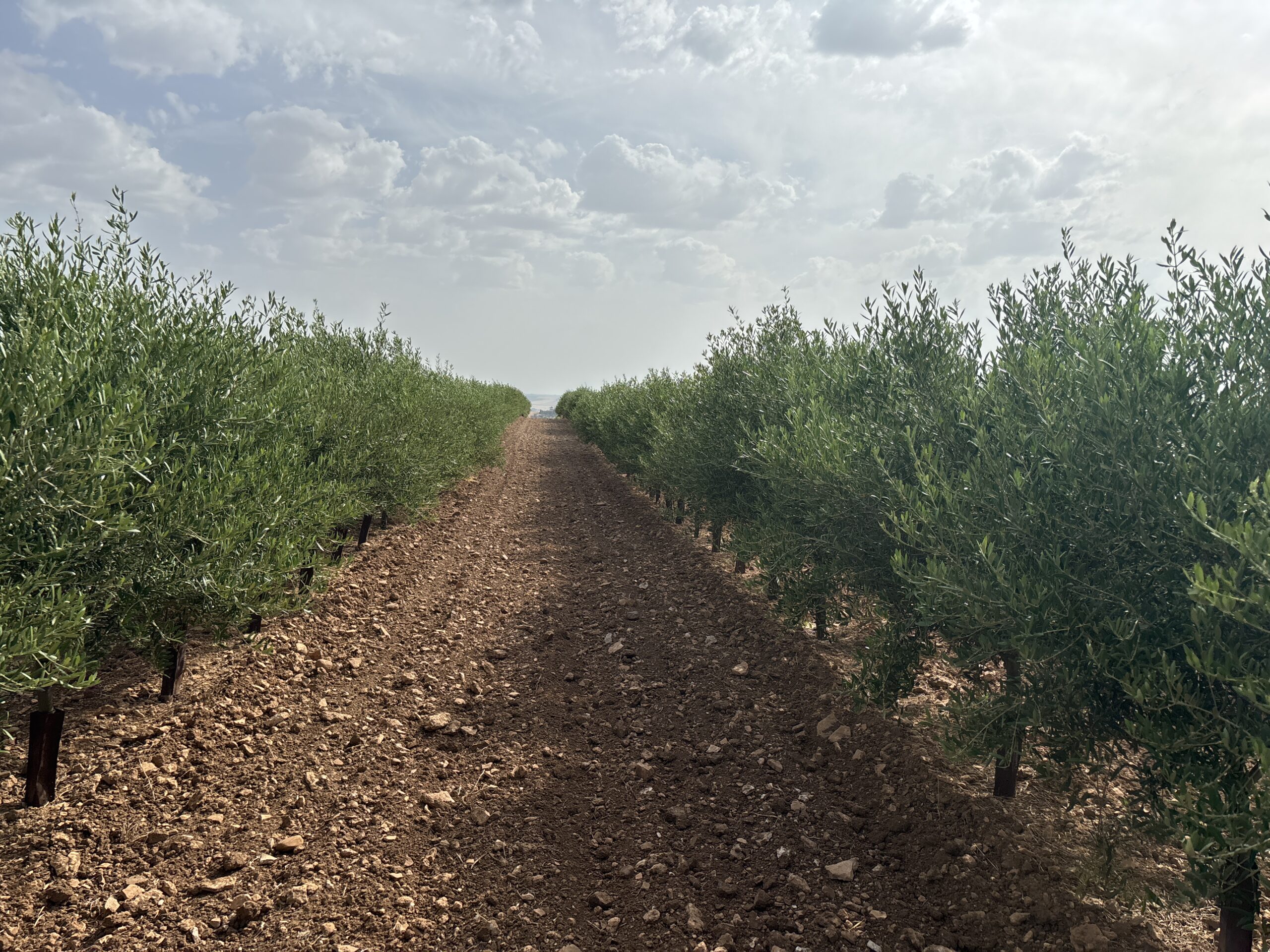
Due to its direct lineage from Leccino, Lecciana has been one of the cultivars selected in evaluation programs carried out or underway to assess the response to the bacterium through field observations in epidemic areas and/or under experimental conditions with artificial inoculation. Although field data are limited because of the lack of mature Lecciana orchards in epidemic areas, results have shown that phenotypically, plant vigor has not appeared compromised during the observation period, although a limited number of plants did show mild dieback attributable to the bacterium.
Diagnostic assays revealed infection percentages in Lecciana plants more similar to those found in resistant cultivars than to those measured in susceptible or highly susceptible cultivars, although bacterial populations in positive plants were slightly higher than those estimated in control Leccino plants. However, in most positive plants, the bacterium was sparsely distributed and detectable only in specific parts of the canopy.
Data collected under controlled conditions showed differential behavior compared to Cellina di Nardò, the typical susceptible control. Four years after bacterial inoculation, plants that initially showed leaf drop and dieback near inoculation sites did not show symptom progression. Diagnostic tests revealed the bacterium primarily in twigs and less frequently in leaf petioles, a feature often associated with resistance due to bacterial difficulty in colonizing the plant.
Additional molecular-level data are being collected to determine whether Lecciana exhibits the same gene‑response mechanisms observed in Leccino.
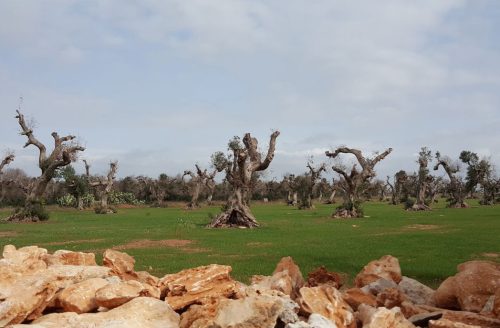
Further evidence supporting the heritability of resistance traits comes from recently published data on natural (non‑controlled) Leccino crosses in epidemic areas..
The study revealed that Leccino is the direct parent of several spontaneous genotypes in Salento (Apulia) with resistant phenotypes—plants showing low levels of dieback despite high inoculum pressure. This suggests that the genetic heritage of this cultivar can be exploited both to understand resistance mechanisms and for breeding programs aimed at conferring resistance to progeny.
Currently, under European phytosanitary regulations, in epidemic areas subject to containment measures, the planting of resistant or tolerant olive cultivars is preferentially authorized. In Apulia, for example, only four cultivars are approved by local authorities for new plantings: Leccino, FS‑17, Lecciana, and Leccio del Corno. It is important to underline that the use of resistant cultivars reduces the likelihood of bacterial acquisition and spread by insect vectors (mainly spittlebugs), thus helping to reduce inoculum pressure in epidemic areas.