
The Revolution of Alpina 10
The Strawberry That Significantly Boosts Yields in Chilean Fields
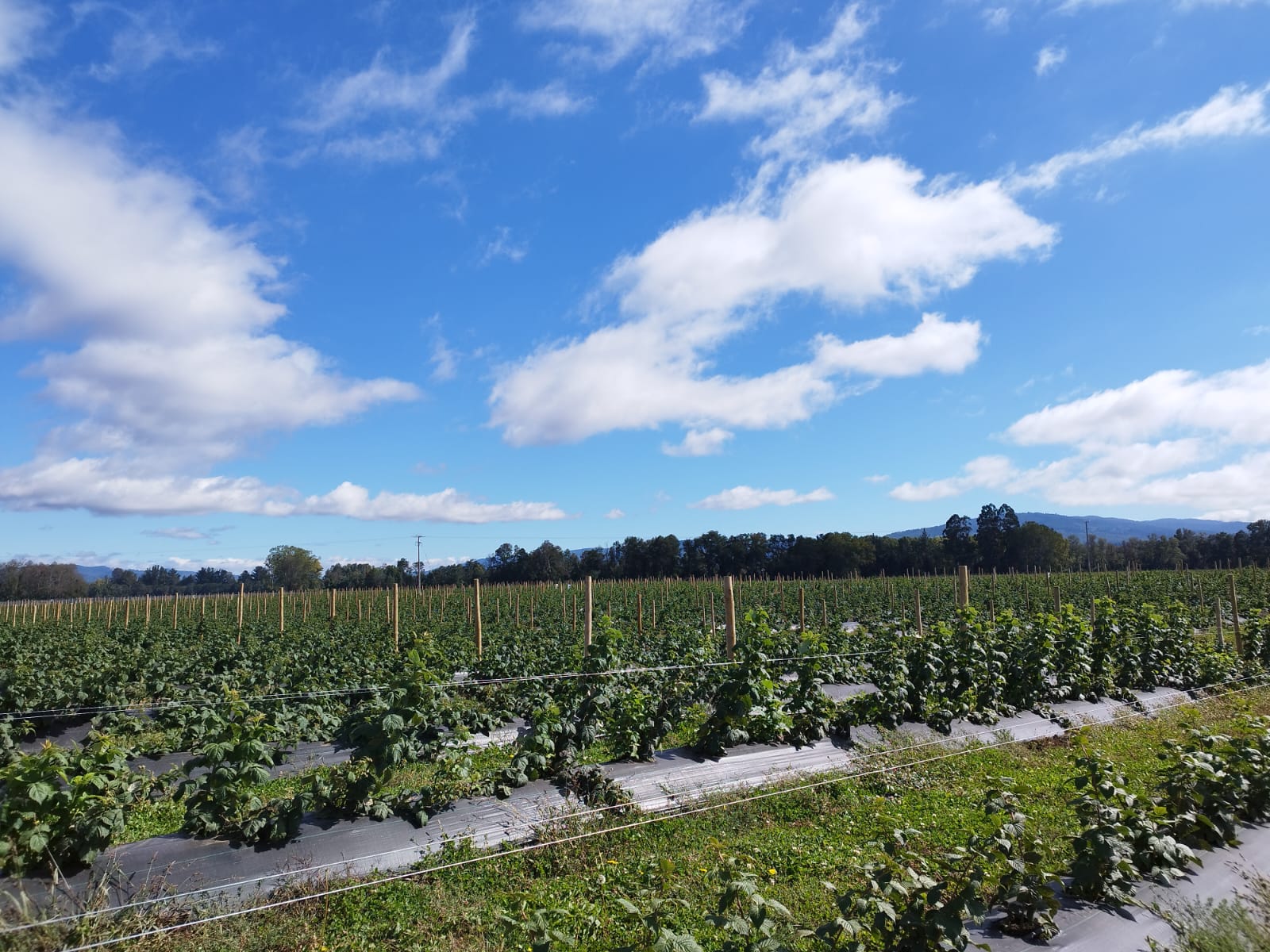
The introduction of the Alpina 10 variety in our country is surprising everyone—from the revolutionary propagation and treatment in hanging nurseries developed by Agromillora Sur to the final production of 70 tons of fruit per hectare, far above the traditional varieties used in Chile. This new production method is consolidating a system that brought together the efforts of various international actors—from CREA in Italy to the University of Santa Catarina in Brazil, along with the Chilean nursery—to achieve remarkable results in productivity, quality, and plant health.
At the Tres Piedras Farmers’ Cooperative in the commune of Pelluhue, located in the Maule region, strawberry production has always been one of its main economic activities. The cooperative consists of six partners and 40 growers, who year after year dedicate a good portion of their land to growing this fruit, which is mainly shipped frozen to different destinations around the world. This activity faced serious challenges in the recent past due to the nematode infestation that affected much of the country, but today the industry is beginning to see the light again.
At Tres Piedras, they are aware of this challenge and have not fallen behind. “We started with 275,000 plants of the Alpina 10 variety,” says manager Nurys Muena. “In my field, for example, we planted 1,000 Alpina 10 plants. In addition, we had 5,000 Monterrey plants. With the first one, we harvested 40 trays, while with 5,000 plants of the other variety, we harvested 30. With 1,000 plants outperforming 5,000, there wasn’t much to think about,” she adds. A key example for an industry that needs to reclaim its value.
According to national fruit bulletins and crop surveys, fruit growing in Chile has shown an increase in total planted area and strong export volumes in recent years; within the processed fruit category, strawberries are among the main exported species. In the frozen fruit segment, shipments have grown and strawberries represent a significant share, according to Odepa records. A technical sheet for mulch/temperate-type plantings of the Monterrey and Albion varieties reported benchmark yields of roughly 50,000 kilos per hectare, depending on the technologies used and the traditional varieties under commercial management. However, the introduction of Alpina 10 has achieved notably higher yields, reaching an average of 70,000 kilos per hectare—numbers that have surprised even the most skeptical observers.
Current Yields of Alpina 10: What It Is and Why It Is Propagated in Elevated Systems
Alpina 10 is a plant with a globular structure, fruit positioned outside its foliage, and a high productive capacity. Leo Rufato, a professor at the State University of Santa Catarina in Brazil, has spent more than 12 years working with this variety and is one of the key contributors to its introduction in Chile. “I participated from the beginning and I’m the coordinator of this project. It started 12 years ago in Brazil, and we made an agreement with CREA—the Council for Agricultural Research and Economic Analysis—of Italy. The material was adapted for southern Italy, with fewer chill hours. We introduced more than 60 varieties in Brazil to evaluate their performance in our climate, with fewer chill hours. Some didn’t perform well, and at the same time, we improved plant production and maintenance methods,” he explains.achieve remarkable results in productivity, quality, and plant health.
“About four years ago, we began looking for ways to improve the nursery multiplication system. We went to a fair in Brazil and saw the advantages of a hanging nursery. We brought several strawberry varieties and tested them in Chile in collaboration with the University of Santa Catarina. After several attempts, we chose Alpina 10, the one that best adapted to our climate,” adds Bernardo Saavedra, Central Zone Manager at Agromillora Sur.
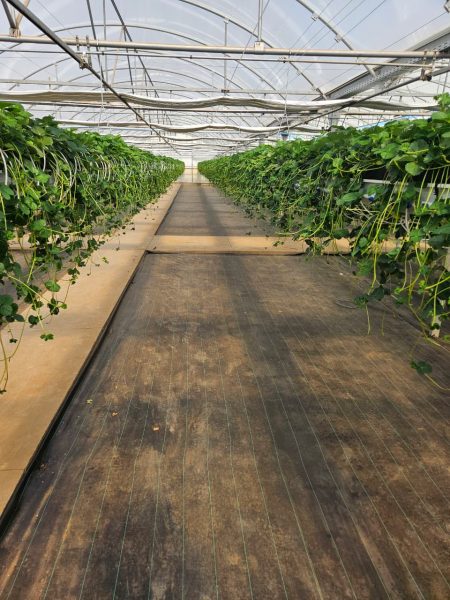
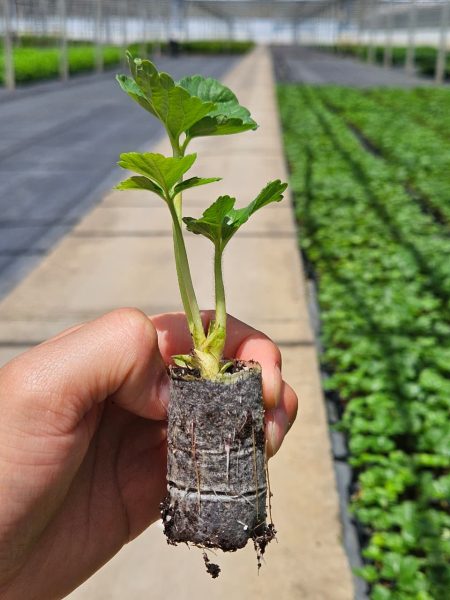
“The vertical system was designed in Brazil. Most of the materials are grown above ground, only with substrates, and it provides a high level of plant health. The vertical system that produces runners for growers is widely used in Italy and is called Mini Drive Plant. These plants are ready to produce immediately. They do not experience stress and begin producing after 60 days. The substrate irrigation system provides balanced nutrition with potassium, phosphorus, and boron, ensuring good yields without losing quality. The production results are astonishing,” says Rufato.
“What motivated us to implement this new strawberry plant production system was the desire to differentiate ourselves through a model that guaranteed plant health, quality, and efficiency,” explains Leonel Gutiérrez, Production Manager at Agromillora Sur. To accomplish this, they chose a hanging design that reduces the risk of pests and diseases and improves crop control.
One of the main innovations is the hanging mother-plant unit inside a greenhouse, developed with channels and pressure-compensated drip irrigation. “The runners are suspended in a system similar to vertical farming, with rectangular pots and drip stakes directed at each mother plant, ensuring greater uniformity and more efficient drainage,” Gutiérrez explains.
This model is complemented by an automated climate and irrigation system that integrates sensors and control units, enabling more precise crop management and better decision-making based on real-time data.
And What About Productivity?
Alpina 10 plants grown in soil can produce two kilos of fruit, and in hydroponic systems—common in Brazil and parts of Italy—they can produce around 1.2 kilos. With adequate temperatures, the plant can produce year-round, although production decreases when temperatures rise above 32°C or drop below 10°C. “In Chile, the plants adapted quite well, averaging about 2.2 kilos per plant—above what we get in Brazil. Soil management here is quite good: low rainfall and strong fertilization,” Rufato adds.
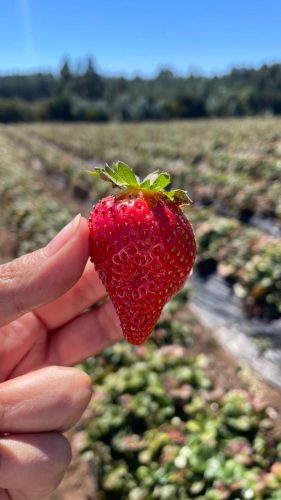
“Productivity is truly spectacular,” says Nurys Muena. She also highlights fruit quality: “We don’t have deformed fruit; it’s sweet, large, and it’s crucial to follow the recommendations of those who produce the plant.” According to her, this variety can produce double or even triple compared to others, allowing farmers to recover their investment within the first year. “However, it’s important to consider the care the plant requires. We’ve placed our trust in a variety that adapts very well: irrigation is the same as for previous varieties, but the key difference is planting distance—we’re spacing plants 40 centimeters apart.”
When Will Consumers Be Able to Enjoy Alpina 10 in Local Markets?
“At Agromillora, we already have plants available to supply different markets, and since December 2025, we’ve started delivering to our clients,” explains Saavedra. In the first stage, production has been primarily destined for frozen exports, which is why local consumers in Chile have not yet encountered this strawberry, as it is not currently sold fresh in the domestic market. “Our expectation is that during the upcoming season, this variety will reach local shelves, standing out for its sweetness—between 10 and 12 degrees Brix—its strong color, and its appealing size.”
For Rufato, the collaboration with Agromillora Sur in Chile has been essential. “For us, they are a very serious company. They want to improve and contribute to fruit production, and they are committed to innovation. Significant resources were invested to achieve these results. The trust between CREA in Italy, the University of Santa Catarina in Brazil, and the private–public partnership resulted in one of the most important outcomes we’ve achieved as researchers,” he concludes.