
The Strategy Powering ISFA’s Hedgerow Almond Leadership in Europe
Technology, Precision, and a Vision for the Future: This Is ISFA’s Hedge-System Almond Orchard in Huesca
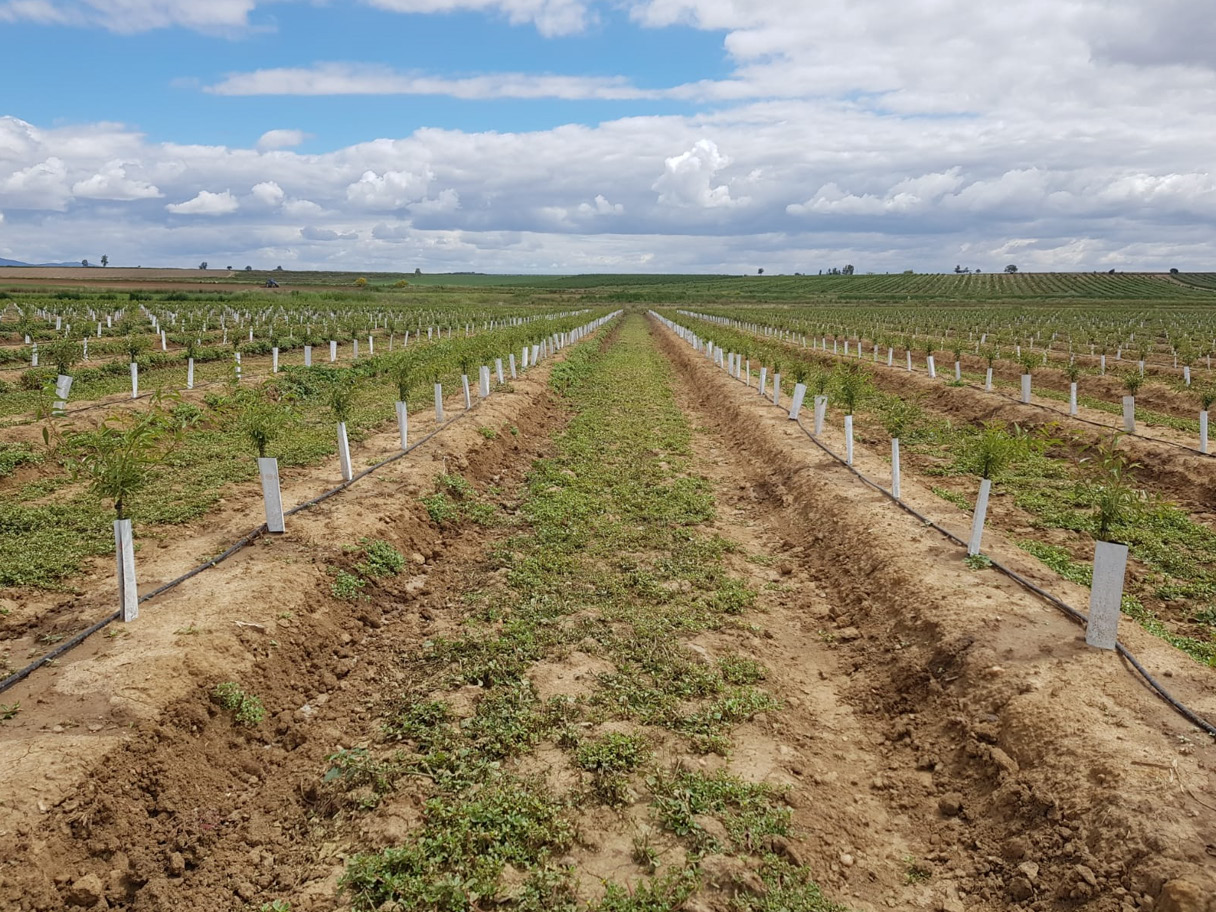
ISFA’s Terreu Farm: Breaking Down Europe’s Largest Hedgerow Almond Project
Don’t miss DemoAlmendro, an opportunity to discover the inner workings of one of the most cutting‑edge almond farms in Europe. Presentations, panel discussions, machinery demonstrations… and much more!
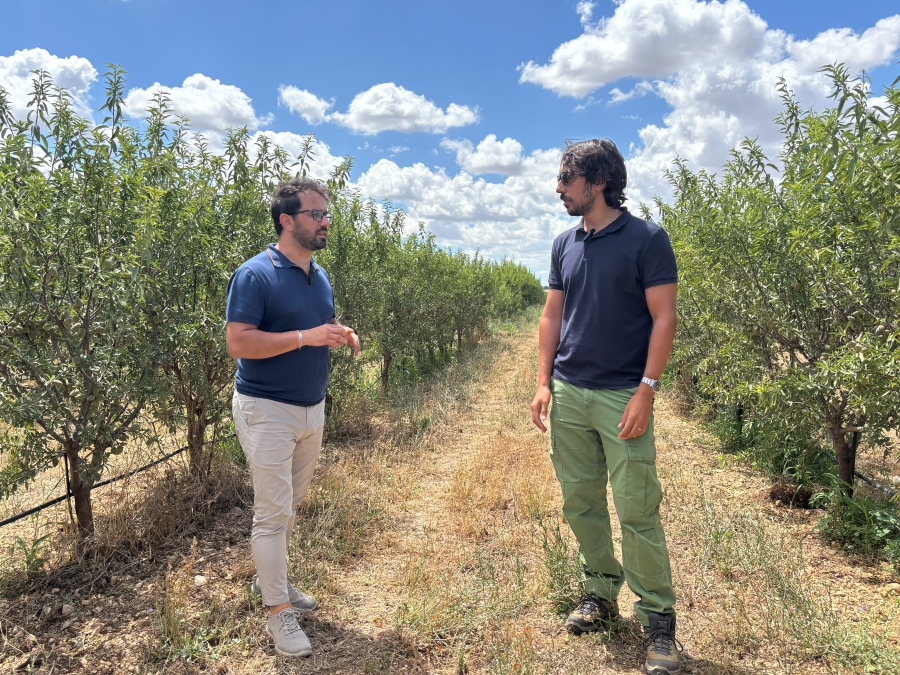
For ISFA, technology is not just a tool—it is the backbone of their management model. “We come from other industries, and from the beginning we knew agriculture had enormous potential for technological application, especially on large-scale farms like this one,” notes Miguel Ángel.
At Terreu, several layers of information and control systems are combined to enable fast, precise decision-making:
- 30 control stations distributed across the farm
- 4 soil moisture sensors per station, placed at different depths
- Conductivity meters and flow meters to monitor irrigation and fertigation
- Regular soil and plant analyses
- A proprietary data management platform
- Satellite imagery to detect variability and potential issues
“This network of sensors allows us to identify any anomaly at an early stage, which translates into more efficient water, fertilizer, and treatment management. In addition, we develop internal tools that integrate all this data in real time,” he explains.
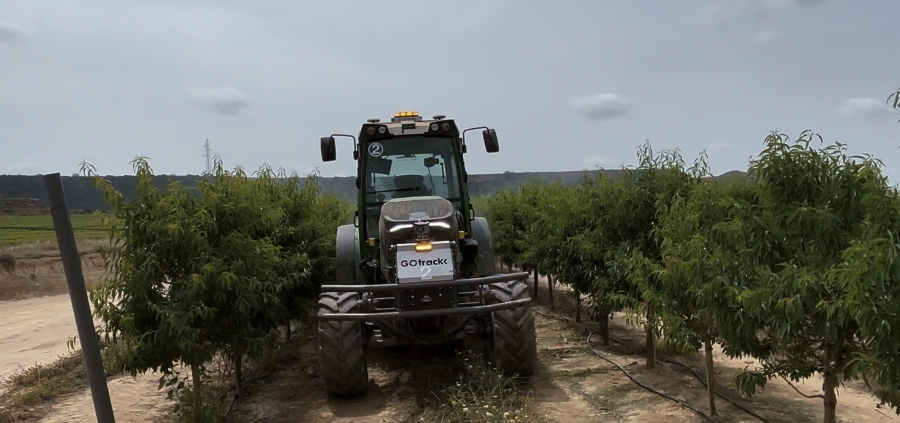
One of their most innovative ongoing projects is the use of autonomous tractors. “We have two units under testing. Beyond being simple tractors, we see them as real technological platforms, because they are the only equipment that travels through every row of the farm several times a year,” he says.
The medium‑term goal is to equip these vehicles with advanced sensors and artificial intelligence capable of early detection of diseases or pests. “If we manage to detect, for example, the presence of rust or green leafhopper in their initial stages, we will be able to take targeted, preventive action, reducing costs and increasing efficiency.”
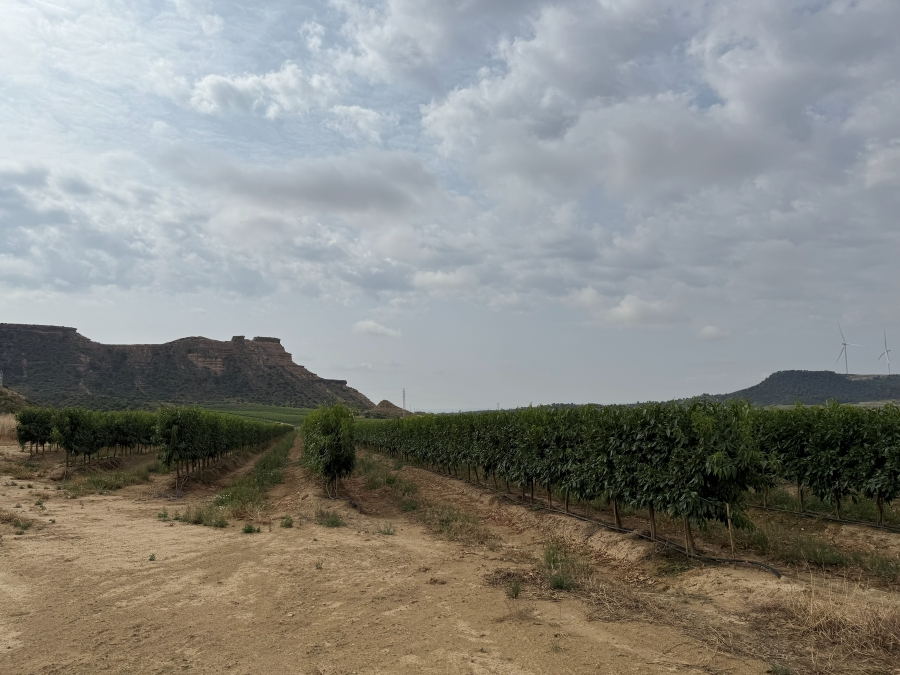
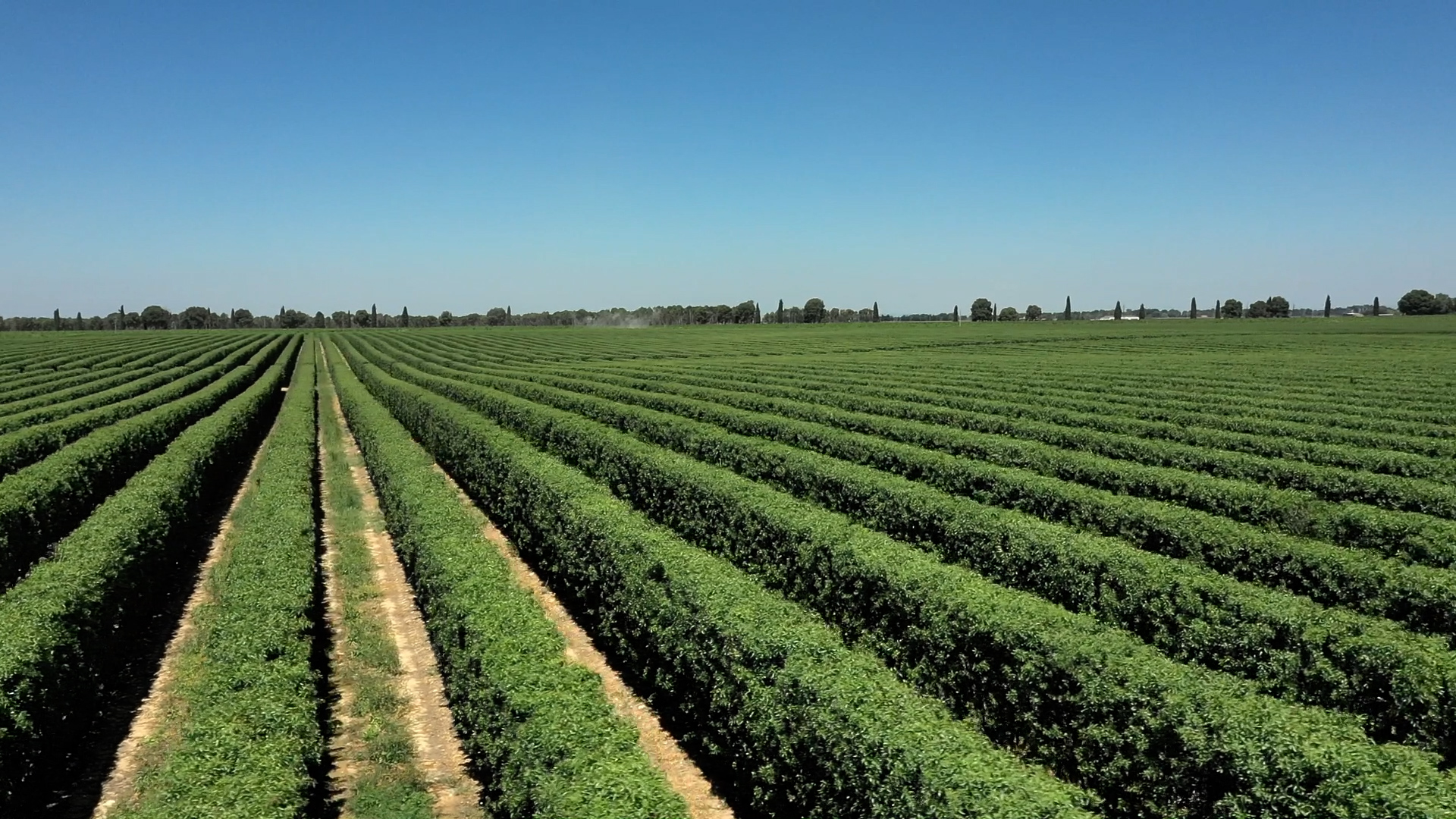
For ISFA, the future of almond production in Spain clearly lies in the hedge system. “We also have 250 hectares of conventional intensive orchards, and every year, when harvest time arrives in August, we’re reaffirmed in our commitment to hedgerow,” says Miguel Ángel. “Thanks to full mechanization, we are capable of harvesting thousands of hectares in just a few weeks—something that would be impossible with traditional systems.”
The hedgerow model not only allows all operations to be mechanized; it also enables the application of new technologies that require flat, uniform canopy structures to operate with maximum precision—just as has happened in fruit crops like apples and pears, and even in super‑intensive olive groves.
From a productivity standpoint, the system continues to advance. “Today we are working to stabilize yields around 3,000 kilos per hectare. With current agronomic and technological developments, this is an increasingly realistic goal,” López says. “The potential is enormous, and in our opinion, the path is irreversible: the almond orchard of the future in our country will be high‑density, hedgerow—just as happened with olive trees.”
Terreu is, without a doubt, an example of how innovation applied to agriculture not only increases profitability, but also enables more sustainable, efficient farming that is ready for the challenges ahead.