
Hedgerow System Reduces D’Agen Plum Costs by Up to 30% and Sets a New Benchmark for Production Efficiency
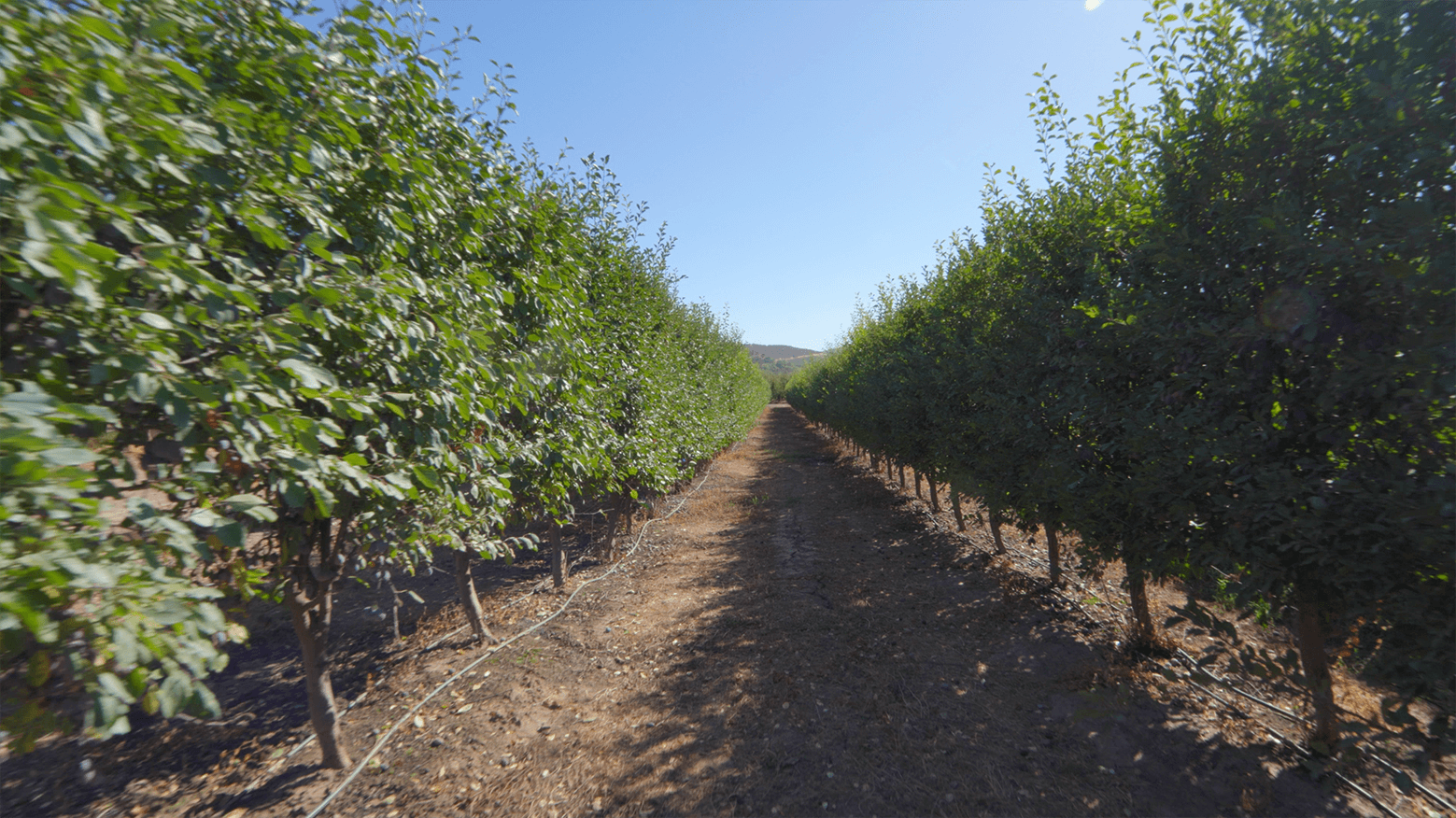
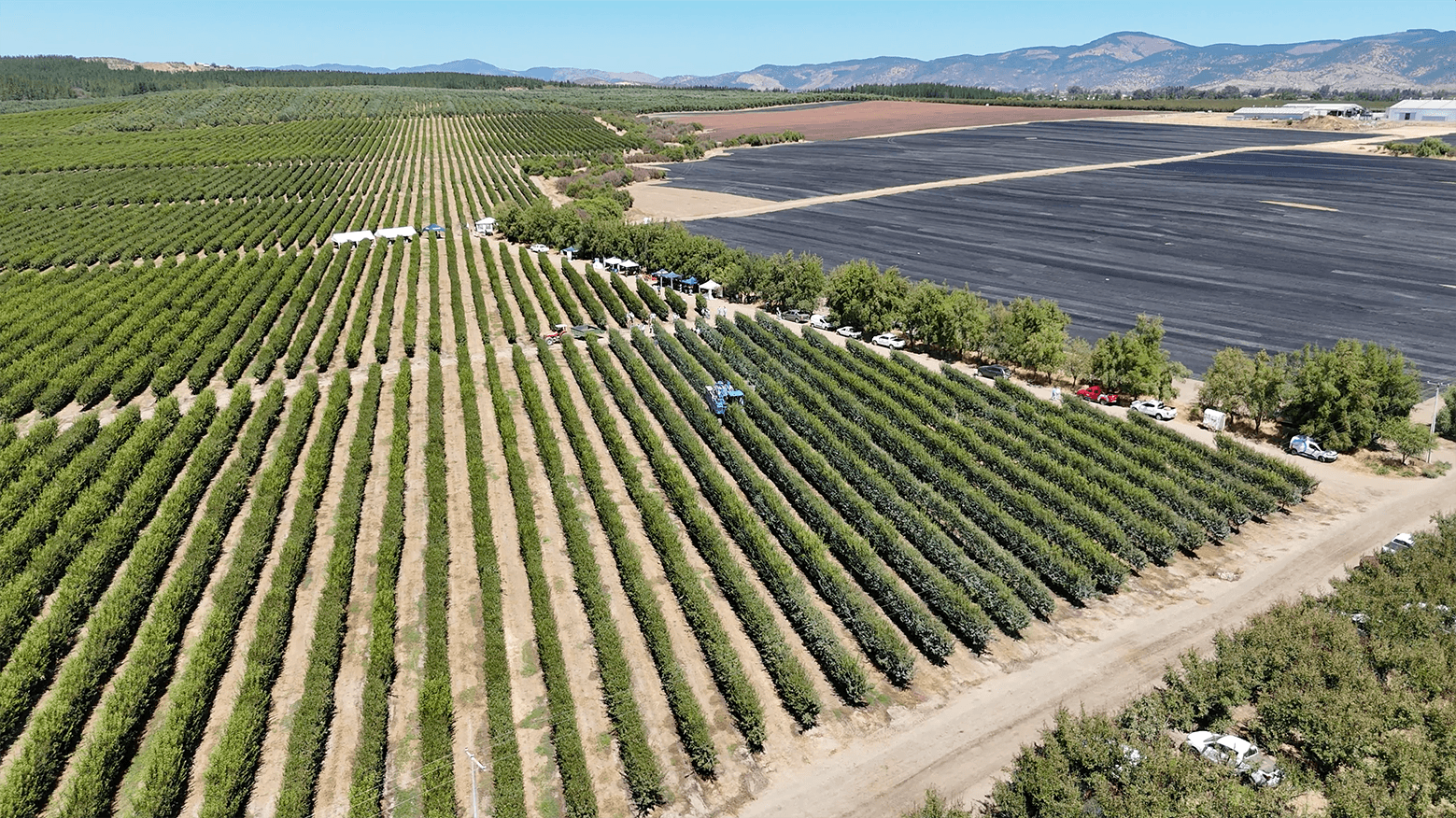
This year, D’Agen plum orchards grafted onto the low-vigor Rootpac® 20 rootstock are delivering outstanding results. After five years of professional orchard establishment, training, and management under the super-high-density hedgerow model, growers have achieved full production with faster, more efficient, and more economical harvests, reducing production costs by approximately 30% at Agrícola Cunculén and Agrícola Santa Helena, respectively.
Modern fruit growing is undergoing a profound transformation driven by labor shortages, rising production costs, and the need for more efficient farming systems. In this context, mechanization has become one of the industry’s primary innovation strategies, particularly through the implementation of fruiting wall or productive hedge systems.
One crop where this model is beginning to gain momentum is the European D’Agen plum, a variety widely used for dried plum production and one of the key pillars of Chile’s fruit industry in recent years.

The numbers speak for themselves. At Agrícola Cunculén, located in the Maule Region, plum production plays a major role in the company’s agricultural operations. Five years ago, the company invested in the European plum variety grafted onto Agromillora’s low-vigor Rootpac® 20 rootstock, and today the results are clearly visible.
During this year’s harvest season, the orchard is averaging 36 metric tons of fruit per hectare across its 57 planted hectares, significantly outperforming the 2025 harvest, which yielded 26 metric tons per hectare.
“This result is due to the fact that the orchard has now reached full production. The trees have achieved maximum maturity, and the yield is simply remarkable, with excellent fruit size and higher Brix levels than in previous years,” explains Mauricio Zúñiga, Key Account Manager at Agromillora South America.
“There has also been excellent work in nutrition and irrigation management. Combined with the proven contribution of Rootpac® 20 in increasing dry matter content and soluble solids, the orchard has achieved average drying conversion rates of 2.8, representing an extraordinary advantage compared to the Mariana 2624 rootstock,” he adds.

At Frutexsa, one of Chile’s leading dried fruit exporters and the country’s largest plum producer, encouraging results are also being achieved with D’Agen plums grown under a high-density system.
“We are learning how the trees behave under this model, and the results have been positive. This year, we expect between 20 and 25 metric tons of fresh fruit per hectare,” says Milton Mejías, manager of Agrícola Santa Helena, part of the Frutexsa Group.
“Last year, in the orchard’s first harvest, we obtained around five metric tons per hectare. This year, the trees have developed greater structure and canopy volume, reaching 2.4 meters in height, which has allowed them to achieve these yields in their second harvest during the fourth leaf,” he adds.
The company currently has 17.2 hectares of D’Agen plums planted under a high-density system.
“Based on these preliminary results, our goal is for every new planting to use this rootstock and this high-density model. That is definitely the direction we want to pursue in the future,” Mejías comments.
A Competitive Industry Focused on Lowering Costs
Chile’s plum industry has established itself as one of the most important in the Southern Hemisphere. The country currently has more than 13,000 hectares planted with European plums and an annual production exceeding 110,000 metric tons of fruit.
From an international trade perspective, the industry continues to generate significant results. In 2024 alone, Chile exported nearly 88,897 metric tons of dried plums, generating more than US$255 million in returns and reaching 78 international markets.

The sector maintained its momentum throughout 2025. During the first half of the year, exports exceeded 34,000 metric tons, generating nearly US$110 million in revenue.
These figures underscore the strategic importance of the plum industry for Chilean agriculture, while also highlighting the challenges growers face in maintaining competitiveness amid rising production costs.
Improving operational efficiency remains a constant challenge. With a high-density system, a fruiting wall structure, and efficient operational management, production costs can be reduced by as much as 30% compared to traditional orchards.
“Today, plums are generating higher returns than cherries,” says Mauricio Zúñiga.
“For example, if an orchard produces 12 metric tons of dried plums this year, at an average price of US$2 per kilogram, that represents approximately US$24,000 in revenue. Subtracting around US$7,000 in operating costs leaves a profit of roughly US$17,000,” he explains.
“Current prices are very favorable. However, when prices fall to historical lows, this new training and orchard management system becomes the key factor that allows growers to remain profitable,” he concludes.
The mechanizable high-density system has generated considerable enthusiasm among growers. The operation eliminates manual pruning, requiring only two mechanical pruning passes per year. The first is carried out at the beginning of autumn and the second in late spring using a tractor-mounted hedging machine operated by a single person.
Harvesting is also much simpler and faster. A straddle harvester, similar to those used in vineyards, operates with one driver, supported by two tractors towing receiving bins at the end of each row, which unload directly onto the drying yard.
“The difference compared to the traditional system is remarkable,” says Milton Mejías.
“You can save US$2,000 or more per hectare. Harvesting is a clear example: a side-by-side harvesting system and its full operation can cost around CLP 1,250,000, while harvesting with a straddle machine does not exceed CLP 420,000. On top of that, there are savings in water, electricity, drone applications, mechanical pruning, and more,” he concludes.