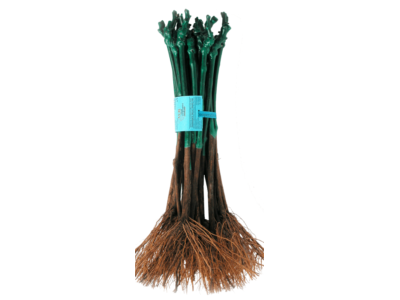

Innovation against downy and powdery mildew in the Penedès
The 400-hectare Sumarroca winery estate has hosted trials of PIWI varieties, carried out in collaboration with Agromillora and INCAVI
A 400-hectare estate embodies Sumarroca winery’s commitment to environmentally respectful viticulture—one that respects the soil, integrates with the landscape, and coexists with the people of the Penedès region.
The work carried out by the Sumarroca family since the early 1980s led to the decision to certify all their production—both still and sparkling wines—as organic starting in 2018. This same philosophy has driven them to promote the Espiells Terra de Vi association, created with the aim of protecting the Alt Penedès region, specifically its northern wine-growing area, and to participate in various research and innovation projects.
Concern about staying within organic viticulture led the winery to collaborate with Agromillora and the Catalan Institute of Vine and Wine (INCAVI) in organizing trial plots of PIWI varieties.
“The goal of the research was the characterization of varieties and their registration, so that growers can have access to plants resistant to downy mildew and powdery mildew,” explains Ricard Fusté, technical director of Gestió Tecnoagraria and vineyard manager at Sumarroca.
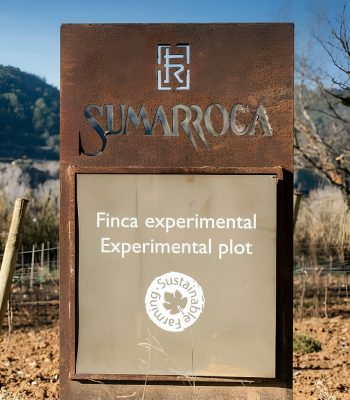
PIWI is the German abbreviation for Pilzwiderstandsfähige (fungus-resistant varieties). These are plants that, “through sexual reproduction over many years,” have become strong enough to withstand diseases such as powdery mildew and downy mildew.
To study how a number of self-resistant varieties perform, two plots were planted at the Sumarroca and Molí Coloma estates. According to Fusté, the main advantage of participating in the research is that, since it takes place within the winery’s own vineyards, “over several seasons we were able to compare the performance of PIWI varieties with conventional ones.”
Fusté is “100% convinced” of the need to continue research into genetic improvement and the development of resistant varieties, which can play a very important role in vineyards like those of Sumarroca.
The 400-hectare Sumarroca estate has hosted trials of PIWI varieties, in collaboration with Agromillora and INCAVI.
The Sumarroca vineyard will host a new edition of Demoviña on June 11.
Located in an area “particularly suitable for organic viticulture,” there are nevertheless years when downy mildew appears with great intensity.
The outcome of the research carried out with Agromillora confirmed that many PIWI varieties have commercial potential. In fact, similar trials have been conducted in other wine-producing regions of Spain.
Castilla y León, for example, already has two white varieties (Soreli and Sauvignon Rytos) and two red varieties (Cabernet Eidos and Merlot Khorus) that are resistant to downy and powdery mildew.
Along the same lines, by 2031 a resistant Garnacha could be available, which would be of interest for Catalan vineyards, as well as a resistant Godello, with major implications for vineyards in Bierzo and Galicia.

Evitar pérdidas en el viñedo
As Agromillora points out, fungal diseases such as downy mildew (Plasmopara viticola) and powdery mildew (Uncinula necator) cause severe losses in vineyards worldwide. One or both appear endemically in most wine-growing regions.
Control methods for these diseases are based on applying fungicides containing copper and sulfur. Sulfur use is not restricted, but it has drawbacks: it can affect the applicator (irritating eyes, respiratory system, and skin), it can drift under light wind conditions, it can cause phytotoxicity under high temperature and humidity, and it may negatively affect beneficial fauna.
Copper use, on the other hand, is limited to 4 kg/ha per year in certified organic agriculture and can cause similar issues. Additionally, residues of these fungicides on grapes can later create problems during must fermentation and lead to unpleasant aromas.
Therefore, producing a high-quality final product with low or zero concentrations of these compounds—and healthier compared to conventional production—is a challenge for the wine sector.
PIWI varieties have been obtained through interspecific crosses between Vitis vinifera and other Vitis species. Therefore, achieving a high-quality final product with low or zero concentrations of these compounds—and one that is healthier compared to conventional production—represents a challenge for the wine industry.
PIWI varieties have been developed through interspecific crosses between Vitis vinifera and other Vitis species. “These varieties are not intended to provide a zero-treatment crop, as the natural evolution of pathogens may overcome, to a greater or lesser extent, the resistance mechanisms introduced into the varieties,” the company notes. Therefore, depending on disease pressure, phytosanitary applications could be significantly reduced, “bringing both economic and environmental benefits.”

A process defined by rigor
The process of developing varieties tolerant to downy and powdery mildew for winemaking takes around eight years. Vineyards typically begin to provide reliable data four years after planting.
If the trials are successful, all the data must be compiled and reports prepared as required by the authorities. The wines obtained from these varieties must show optimal organoleptic characteristics, without a pronounced “foxy” flavor (methyl anthranilate), excessive strawberry jam aroma (furaneol), and with methanol levels below EU maximum limits.
The usual procedure is for the Ministry to verify that the varieties are “distinct, uniform, and stable.” From that point on, they can be entered into the Register of Commercial Varieties.